REVIEW · MARSA ALAM
Private Luxor OverNight With Hot Air Balloon Ride From Marsa Alam
Book on Viator →Operated by Nile Valley Tours · Bookable on Viator
One sunrise, two ancient worlds, and you’re changed. This Marsa Alam–to–Luxor overnight pairs the big-name temples with a hot air balloon ride at dawn, so you see Luxor in the best light: temples by day, and the river-valley from above. It’s a focused way to hit the essentials without turning the trip into a sprint.
I especially like the combination of guided visits and smart pacing. You get time with an Egyptology guide while you walk through Karnak, Hatshepsut at Deir el-Bahari, and the Valley of the Kings—sites that can feel confusing if you’re reading signs only. I also like that you’re not trying to do everything as a one-day cram: you sleep in a 4-star hotel and then fly next morning.
The main thing to weigh is cost on top of the package. Entrance tickets for Karnak, Hatshepsut, and the Valley of the Kings aren’t included (you’ll pay EGP 1410), and the balloon depends on weather. Start time is also early, so plan on an alarm you won’t love.
In This Review
- Key highlights you’ll actually care about
- Why this 2-day Luxor plan works from Marsa Alam
- Karnak Temple: Amun, Mut, and Khonsu on a massive scale
- Deir el-Bahari and Hatshepsut’s terraces: a cliffside monument with attitude
- The Valley of the Kings: New Kingdom burials, not just famous names
- Colossi of Memnon: the 30-minute stop that still sticks
- Lunch and breaks: fueling a day that starts early
- The balloon morning from the start time you’ll remember
- Price and logistics: what $280 covers, and what you’ll add
- The guide quality matters more than you think
- Who should book this Luxor overnight with balloon
- Should you book this Luxor overnight with hot air balloon from Marsa Alam?
- FAQ
- What time does the tour start?
- How long is the experience?
- What’s included in the price?
- Which entrance tickets are not included?
- Is the Colossi of Memnon admission included?
- How long is the hot air balloon flight?
- What happens if weather is bad for the balloon?
Key highlights you’ll actually care about
- Sunrise balloon flight (about 45 minutes, flying time listed as 45 to 60 minutes) over Luxor’s valleys and temples
- Expert Egyptology guide who helps you understand what you’re looking at, not just where it is
- Overnight in a 4-star hotel with breakfast so you’re not wrecked for the flight
- Small group size (up to 15 travelers), which makes the day feel calmer than big-bus tours
- Colossi of Memnon included with admission ticket
- Lunch included on Day 1, helpful when you’re moving from site to site
Why this 2-day Luxor plan works from Marsa Alam
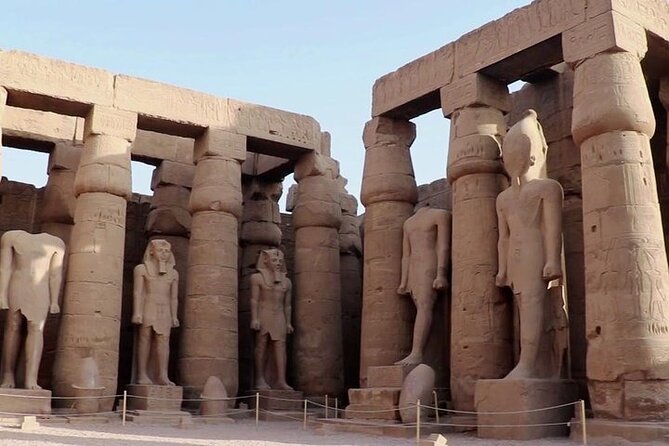
Luxor can be a day-trip from Hurghada-type bases, but doing it as a 2-day overnight makes a difference. You get to see the major monuments with daylight time to wander, then wake up for the balloon when the air is calm and the light is dramatic.
The pace is also built around the realities of Luxor. Karnak and Deir el-Bahari are huge places, and the Valley of the Kings takes more than “a quick photo stop” if you want to understand what it all means. Adding an overnight hotel means you’re not constantly rushing between transport and ticket lines.
From the practical side, pickup and drop-off are included, so you’re not spending your morning hunting for a meeting point. And because the group cap is 15, you’ll likely get a bit more personal attention from your guide than you would on a large coach.
You can also read our reviews of more tours and experiences in Marsa Alam.
Karnak Temple: Amun, Mut, and Khonsu on a massive scale
Karnak Temple is the kind of place where your brain keeps trying to zoom out to take it all in—and it can’t. The complex dates back to around 2055 BC and grew over centuries, so you’re walking through layers of ancient religious life rather than one single building.
In a guided visit, Karnak makes more sense fast. You learn how it functioned as a cult temple dedicated to Amun, Mut, and Khonsu, and why the scale is so hard to wrap your head around. Even if you’ve seen photos before, being there in person changes the experience. Columns, pylons, open courts—everything is arranged to move you through a story.
You’ll have about an hour here, which is enough to hit major highlights without feeling like you’re spending the whole day inside a maze. One important note: admission tickets for Karnak aren’t included in the package price, so budget for the paid entry separately.
Deir el-Bahari and Hatshepsut’s terraces: a cliffside monument with attitude
Deir el-Bahari is where Luxor gets visually dramatic. Hatshepsut’s temple complex is built into the cliffs on three huge terraces, with ramps connecting the levels. The effect is almost theatrical: you see the structure climb the rock face like it was designed to catch the sun.
What I like about a guided stop here is how it’s explained. Hatshepsut is remembered as one of Egypt’s rare female pharaohs, and her name is attached to the monument—yet the information you’ll hear often includes that parts of the site connect to earlier rulers as well. That matters because it stops the visit from becoming a single-character story and turns it into a timeline.
Expect about an hour for this stop. You’ll also notice how the temple is marked by colonnades of largely unadorned square pillars, plus the impressive use of space and symmetry. Entrance tickets for this site aren’t included either, so plan to handle that cost directly on the day.
The Valley of the Kings: New Kingdom burials, not just famous names
Then comes the Valley of the Kings, the royal burial ground for pharaohs from the 18th, 19th, and 20th dynasties in Egypt’s New Kingdom. This is where the names you’ve heard—like Tutankhamun, Ramses II, Tuthmosis III, and Seti I—stop being abstract. You start to understand why this valley mattered so much, and why it became the place to build tombs on a serious scale.
You’ll spend around two hours here. That timing feels right because you’re not just passing through; you have time to get oriented and understand the logic of the valley. Even if tomb interiors vary and not every single spot is always accessible in the same way, the valley itself is worth the time.
As with Karnak and Hatshepsut, admission for the Valley of the Kings isn’t included, so again, budget for the paid entry. If you’re sensitive to heat, this is also a good place to take breaks and pace yourself—there’s a lot of walking before you even start staring at carved walls.
Colossi of Memnon: the 30-minute stop that still sticks
After the Valley, you’ll hit the Colossi of Memnon. These are the two giant stone statues associated with the Temple of Memnon, tied to a legend that grew over time. Your guide will explain the story around Memnon and why people connected the statues with a dawn sound that became known as Vocal Memnon.
The modern Arabic name you might hear is Kom el-Hatan, but the famous name is Memnon’s. The statue connection to the legend of Eos, goddess of dawn, is one of those details that makes the place feel less like a random roadside photo spot and more like part of an ancient web of stories.
Timing is about 30 minutes, and the admission ticket for this stop is included. For a short visit, it leaves a strong impression because the scale is so immediate. Two statues, huge presence, lots of atmosphere.
Lunch and breaks: fueling a day that starts early
Food is included on Day 1. You’ll have lunch at a restaurant that’s described as excellent. This matters more than you might think on a Luxor day because you’ll be moving between major sites and trying to stay focused while the sun does what it does.
I find that a scheduled lunch keeps the day from unraveling. If you’re on your own, you’re always guessing where to eat fast and where it’s worth it. With lunch taken care of, you can spend your mental energy on the monuments, not on finding a safe, clean meal.
For the balloon day, breakfast is included, which is another good move. You don’t want to be figuring out food while you’re running on early-morning autopilot.
The balloon morning from the start time you’ll remember
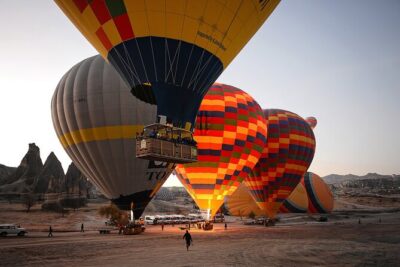
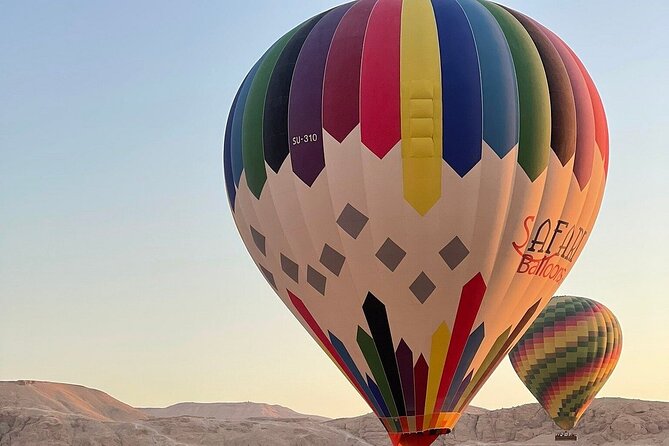
The start time is 4:30 am, and that early departure sets the mood immediately. You’ll be picked up and then transferred to the take-off site for the balloon. The tour listing gives you a flight window of about 45 minutes, and the included flying time is listed as 45 to 60 minutes, so you should plan to be flexible while the balloon operations run.
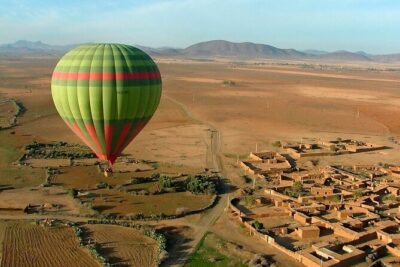
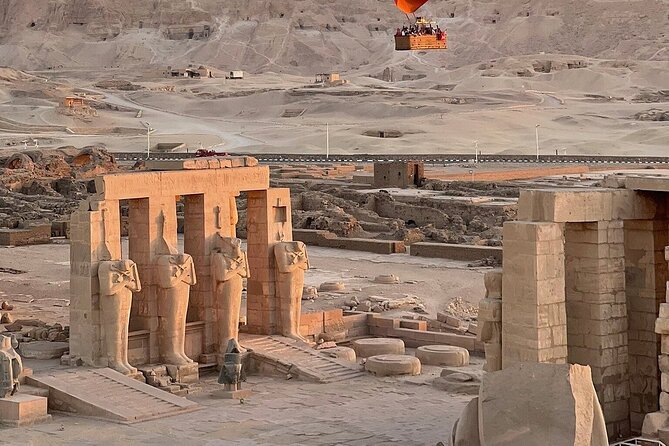
What you should expect during the flight is a new viewpoint on Luxor. From above, the valleys and temple areas look like a connected system, not separate stops. Many people love how the river corridor and the surrounding areas can look greener and softer from the air compared with what you see from ground level.
This isn’t about thrill-ride energy. It’s more about quiet wonder and seeing how the monuments sit in relation to each other. The early start buys you calmer air and the kind of sunrise light that makes everything feel crisp.
One important real-world point: the balloon requires good weather. If conditions aren’t right, the experience may be rescheduled or refunded, so don’t assume it’s guaranteed on the calendar no matter what.
Price and logistics: what $280 covers, and what you’ll add
At $280 per person, this overnight Luxor package is trying to do a lot for the price. Here’s what’s included: hotel pickup and drop-off, an Egyptology guide, breakfast, lunch, and balloon flight time (with ticket included). You’re also getting the structure of a tight 2-day highlight plan with a small-group limit of 15 travelers.
The trade-off is that key entrance tickets aren’t included. You’ll pay EGP 1410 for Karnak Temple, the Temple of Hatshepsut, and the Valley of the Kings. Colossi of Memnon is included with admission, which helps offset part of the total.
So the value question becomes simple: do you want a guide and balloon without spending time planning, buying tickets, and coordinating transport? If yes, the package is a strong deal for a lot of real work being handled for you. If you’re comfortable self-guiding and you only want one or two sites, you might find cheaper ways to do it—but this option is built for people who want the full Luxor hit with less friction.
The guide quality matters more than you think
The best part of tours like this isn’t the temples alone—it’s how well the guide helps you see what matters. In the feedback I saw, Prof Mahmoud El Esnawy stood out for being extremely knowledgeable and making it hard to keep up with notes because the explanations were coming fast. That’s a great sign for you if you like context: symbols, names, and why each building looks the way it does.
For solo travelers, comfort and professionalism also matter. One of the notes I saw emphasized how a female solo traveler felt at ease with the professor and the driver. That doesn’t mean every day will be identical, but it does suggest the operator puts care into who they send and how the experience feels.
You might also notice staff names like Shabi and Cindy appearing in helpful messages. That’s a good clue that communication can be responsive, not robotic.
Who should book this Luxor overnight with balloon
This is a great match if you want:
- Big Luxor highlights in a controlled time frame (not a scattered list of random stops)
- A guide who can explain what you’re looking at as you walk
- A balloon ride timed to sunrise, with pickup and transfer handled
- A calmer group size (up to 15), plus hotel comfort and included meals
You might want to skip (or at least think twice) if:
- You hate early mornings. 4:30 am is non-negotiable in practice.
- You want to control the day completely. This is a structured plan with set site durations.
- You’re trying to keep the all-in cost extremely low, since the biggest temple entries are paid separately.
Moderate physical fitness is recommended, which makes sense for the walking involved at Karnak, Deir el-Bahari, and the Valley of the Kings.
Should you book this Luxor overnight with hot air balloon from Marsa Alam?
I’d book it if your goal is Luxor with minimal stress: guide-led monuments by day, then a sunrise balloon that gives you the “how it all fits together” view from above. The $280 price makes sense because it covers transport, hotel, meals, and balloon flight time, and you get a tight highlight set rather than an endless list of stops.
If you’re budget-sensitive, do the math first with EGP 1410 for the major entrance tickets. And if you’re the type who needs 100 percent certainty, remember the balloon depends on good weather.
If you want a smooth, well-paced Luxor experience with a sky-view finale, this one is built for that.
FAQ
What time does the tour start?
The meeting start time is 4:30 am, with transfer to the take-off site for the balloon on Day 2.
How long is the experience?
It runs for about 2 days.
What’s included in the price?
The package includes pickup and drop-off, an Egyptology guide, breakfast, lunch, hotel accommodation in a 4-star hotel, and the hot air balloon flight time (45 to 60 minutes).
Which entrance tickets are not included?
Entrance tickets for Karnak Temple, the Temple of Hatshepsut, and the Valley of the Kings are not included. The listed cost is EGP 1410.
Is the Colossi of Memnon admission included?
Yes. The Colossi of Memnon stop includes an admission ticket.
How long is the hot air balloon flight?
The balloon flight is listed as about 45 minutes, and included flying time is described as 45 to 60 minutes.
What happens if weather is bad for the balloon?
The experience requires good weather. If it’s canceled due to poor weather, you’ll be offered a different date or a full refund.