REVIEW · MARSA ALAM
Full Day Tour from Marsa Alam to Luxor with Hot Air Balloon
Book on Viator →Operated by Nice tours · Bookable on Viator
A night drive can turn into a history lesson. This full-day trip strings together a sunrise hot air balloon flight with Luxor’s top sites and a private Egyptologist who helps you read what you’re seeing. I like that the schedule keeps you moving without feeling like a race, and that you’re not left to figure out logistics on your own.
The standout for me is the pairing of sky-time and ground-time: balloon views at dawn, then temples and tombs on both banks with clear explanations. The other big win is practical comfort for a long haul, since you’ve got pickup, an air-conditioned vehicle, and lunch handled.
One thing to consider: this is a late-night start and an about-20-hour day, so it can feel intense—especially if you’re also budgeting for entrance fees that are not included.
In This Review
- Key things to know before you go
- A late-night ride from Marsa Alam to Luxor
- Sunrise hot-air balloon: the main event
- Valley of the Kings: three tombs and real hieroglyph focus
- Deir el-Bahari: Hatshepsut’s three-tier moment
- Deir el-Medina: workers’ lives and a temple with Final Judgement carvings
- Colossi of Memnon, lunch, and a Nile break by design
- Karnak Temple: Amun’s vast stage on the East Bank
- Luxor Temple: Amenhotep III roots and Ramses II completion
- Price and value: is $600 fair for this route?
- The guide makes the difference: Ahmed Al Sunni, Dina, and Ahmed Bahaa
- Who this tour suits best
- Should you book this Luxor full day with balloon?
- FAQ
- What time does the tour start?
- How long is the tour?
- Is hotel pickup and drop-off included?
- What’s included in the price?
- Are entrance fees included?
- Which major sites are included?
- Is the hot air balloon ride included?
- What are the felucca ride details?
- Is there free cancellation?
Key things to know before you go
- Sunrise hot air balloon over Luxor’s archaeological sites, with about 30 to 45 minutes in the air
- Private Egyptologist guidance at multiple stops, plus time to look on your own
- West Bank highlights: Valley of the Kings, Hatshepsut at Deir el-Bahari, and Deir el-Medina
- East Bank classics: Karnak Temple and Luxor Temple, both guided
- Felucca ride included after lunch, a slower pace on the Nile
- All entrance fees not included, so you’ll likely pay on site for tombs and temples
A late-night ride from Marsa Alam to Luxor
This tour starts right after your day in the Red Sea resort world. Pickup is scheduled around 10:00 pm, then you transfer by private, air-conditioned vehicle toward Luxor. In practice, that late departure matters: it buys you an early arrival window for the balloon and the morning sites.
If you want a Luxor day that starts before the heat and ends after dinner-time plans, this is built for that. Your driver handles the route and the navigation, so you can focus on one job only: keeping your camera ready for early light.
Just remember the trade-off. When you pick a balloon sunrise, you also pick a very long day. Plan for a “collapse when you get back” type of evening, and pack accordingly (a light layer helps since dawn can feel cooler than you expect).
You can also read our reviews of more tours and experiences in Marsa Alam.
Sunrise hot-air balloon: the main event
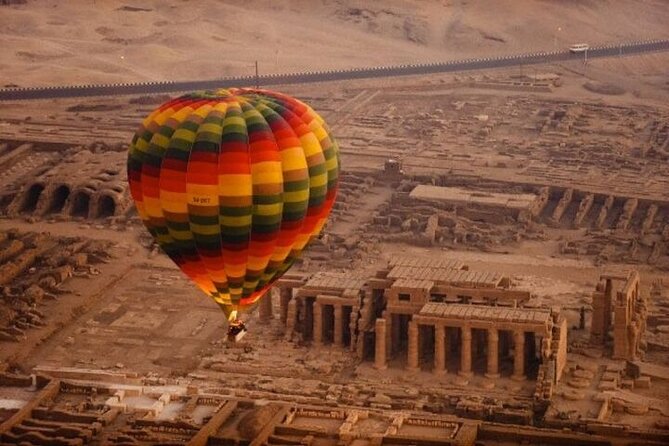
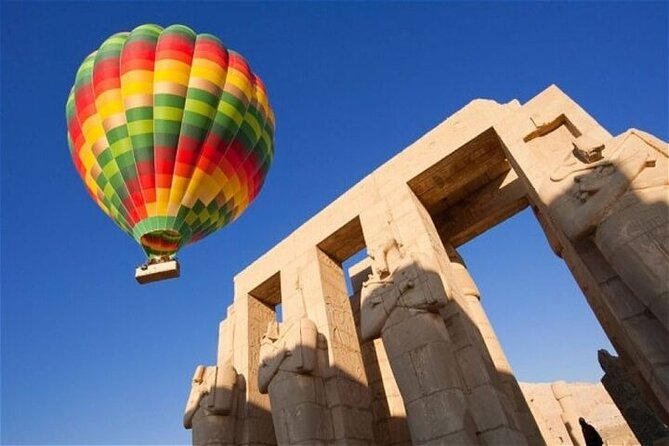
The headline here is the balloon ride timed for sunrise, with about 30 to 45 minutes floating over Luxor’s archaeological areas. This is the kind of activity that makes the whole trip feel worth it, because you’re not just seeing temples—you’re seeing them in context, laid out across the desert and river valley below.
You’ll also get that pre-flight routine moment first: when you arrive in Luxor early morning, there’s a short stop for local tea before you head into the balloon experience. It’s a small detail, but it helps you wake up and feel oriented, especially after a night transfer.
A useful way to think about it: the balloon turns your day into a story. Morning sky sets the scene, then the guided stops help you connect the view you saw overhead to specific names, eras, and artwork themes.
Valley of the Kings: three tombs and real hieroglyph focus
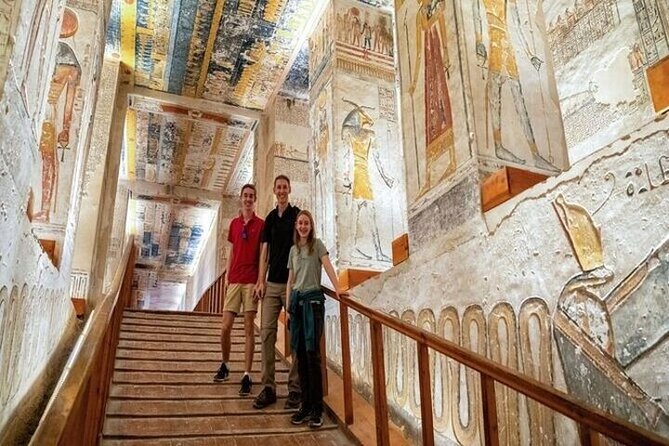
After the balloon, you head to the West Bank for the Valley of the Kings. The tour is designed to show you the “greatest hits” without drowning you in too many stops. You’ll explore three of the most important tombs, with time to see hieroglyph-covered walls up close.
Here’s what makes this stop valuable: tombs in Luxor aren’t just rooms with carvings. They’re structured like storybooks. When you have an Egyptologist explaining what you’re looking at, you start noticing patterns—how scenes relate, what the symbols point to, and how the tomb design supports the beliefs of the time.
The main consideration is timing and pacing. At this point in the day you’re already running on early mornings. So if you tend to get tired in enclosed spaces, it helps to go in with realistic expectations about energy levels and to use your guide’s explanations to make each stop count.
Deir el-Bahari: Hatshepsut’s three-tier moment
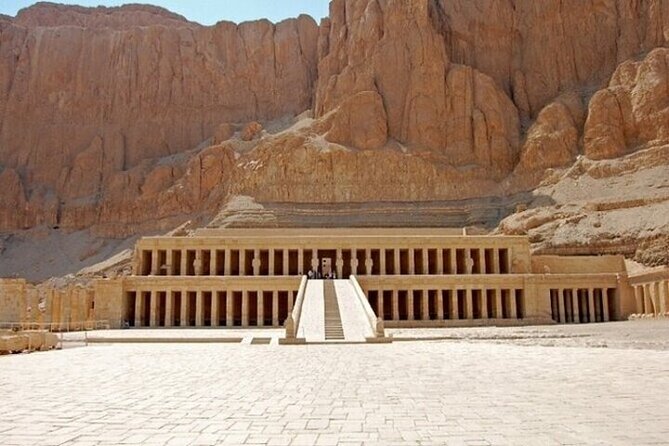
Next comes Temple of Hatshepsut at Deir el-Bahari, one of the most recognizable temple complexes on the West Bank. You’ll focus on Hatshepsut’s mortuary temple, described as a structure with three floors, open limestone balconies, and statues connected to both Osiris and Queen Hatshepsut.
What I like about this stop is how it shifts the feeling from tomb interiors to monumental outdoor architecture. You get a sense of power and planning—temple lines, terraces, and the way the complex frames space. And because the tour includes guided context, Hatshepsut stops being just a name and becomes part of the larger political and religious story.
One practical thought: this complex is a “look closely” place. If you spend time glancing only from far away, you miss why it’s famous. If you take the guide’s cues and slow down, you’ll walk away with sharper details.
Deir el-Medina: workers’ lives and a temple with Final Judgement carvings
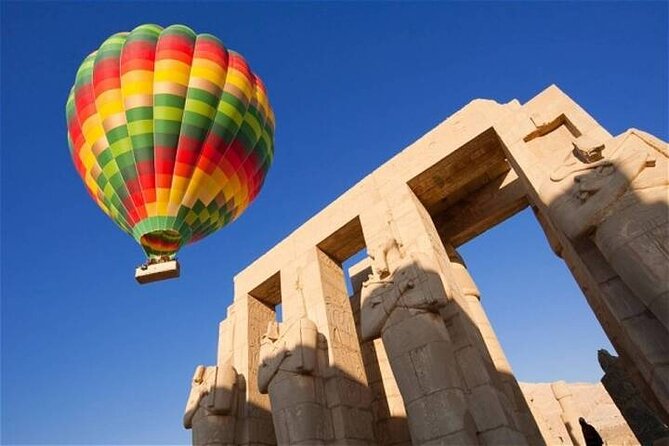
Then you go to Valley of the Artisans (Deir el-Medina), which centers on the workers who lived and worked for royal tomb creation. This is not just another temple stop. The tour includes Deir el-Medina’s Temple dedicated to Hathor, and it highlights carvings connected to the Final Judgement.
This is one of the most interesting parts of the itinerary because it adds everyday human scale. Royal monuments can feel distant. Deir el-Medina makes the system feel lived-in: these were people who built, maintained, and helped create the visual language of the afterlife.
Also, the format includes information from your Egyptologist at each site plus some free time to explore on your own. That’s a smart balance. You get guided clarity first, then a chance to walk around and look again without feeling rushed.
Colossi of Memnon, lunch, and a Nile break by design
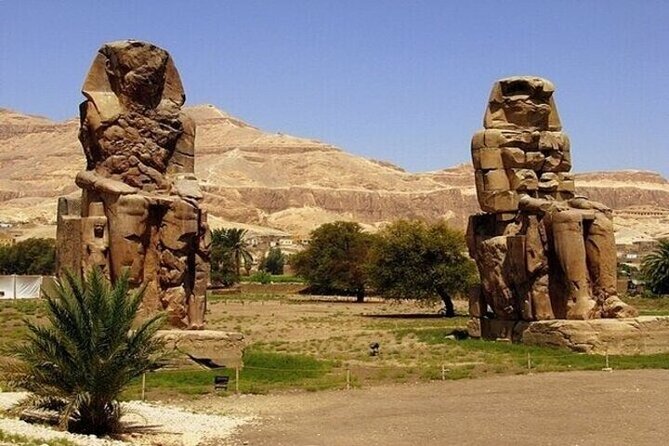
After Deir el-Medina, you visit the Colossi of Memnon, where you’ll see part of Amenhotep III’s mortuary area. Then you stop for lunch at a local restaurant. Lunch is included, and that matters on a long itinerary like this—one missed meal in a multi-leg day turns into a stress spiral fast.
Next is your slower pace moment: a felucca ride in Luxor, about 30 minutes. This isn’t just a box-check. It gives your brain a breather between dense ancient sites on the East Bank.
A felucca also changes your perspective on Luxor. From the river, the temples feel like they relate to the geography—not floating in isolation. You also get better downtime for photos, especially with calmer lighting after the morning rush.
Karnak Temple: Amun’s vast stage on the East Bank
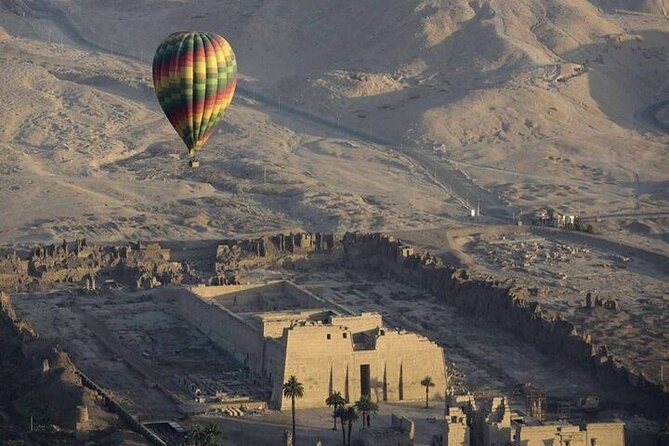
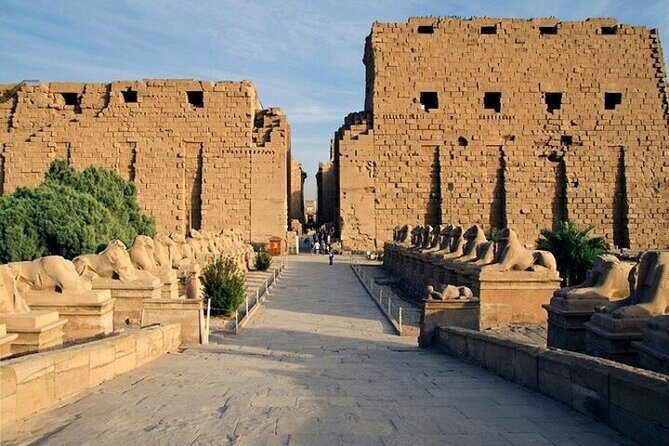
In the afternoon, you head back to the East Bank for Karnak Temple, the biggest temple in Luxor, dedicated to Amun, his wife Mut, and their son Khonsu. The tour gives you about 2 hours here with guide support.
Karnak is the kind of site where size alone can overwhelm you. That’s why a guide helps. With a structured explanation, you start recognizing the purpose of different sections and how the temple complex ties together worship and royal patronage.
Your practical benefit: you’re not wandering without context. You still get time to look on your own, but you’re doing it with a map in your head, not just on paper.
Luxor Temple: Amenhotep III roots and Ramses II completion
After Karnak, you visit Luxor Temple. It’s described as built by Amenhotep III in the 18th Dynasty, with completion by Ramses II. You’ll spend about 1 hour here.
Luxor Temple often feels more approachable than Karnak because it can be easier to follow visually. It’s a good closing match: Karnak gives you the scale, and Luxor Temple helps you connect that scale to specific rulers and time periods.
If you’re the type who likes seeing how different pharaohs left their mark, this stop is strong. It also pairs well with the river-side felucca you did earlier—both create a sense of Luxor’s built environment lining up with the Nile corridor.
Price and value: is $600 fair for this route?
The price listed is $600.00 per person, and the tour runs about 20 hours. That’s not a quick city hop. You’re paying for a long-distance, late-night-to-afternoon transfer, a professional English-speaking Egyptologist, guided stops across both banks, and included meals plus the felucca.
What you get included:
- Hotel pickup and drop-off from Marsa Alam
- Air-conditioned vehicle for the full transfer day
- Professional private Egyptologist English-speaking guide
- Lunch and snacks
- Felucca ride
- All taxes
- Mobile ticket and a private-group format
What you should budget for:
- Entrance fees are not included. The itinerary schedule marks some admissions as free, but the overall tour info lists entrance fees as not included. So you should treat this as pay-on-site territory, especially for tombs and temple entries like the Valley of the Kings and major temple complexes.
Is $600 good value? For me, the “yes” depends on your priorities. If you want the balloon at sunrise plus guided Luxor’s main sites in one shot, you’re paying for focus and time. If you’d rather travel slower and pick temples yourself, you could save money, but you’ll lose the convenience of a full guided route and a coordinated plan.
Also, the guide quality is a real value lever here. In the feedback you’ll see repeated praise for guides named Ahmed Al Sunni, Dina, and Ahmed Bahaa. The notes emphasize clear English, patience, and explanations that help you understand more than just what something looks like.
The guide makes the difference: Ahmed Al Sunni, Dina, and Ahmed Bahaa
You’ll often find balloon-tied itineraries that feel like a rushing parade. The good news here is that the guided pieces are where the trip becomes meaningful.
The feedback highlights Ahmed Al Sunni and Dina as strong guides, with helpful, clear explanations. Other notes give extra credit to Ahmed Bahaa, with praise for fluent English and an approach that stays patient while explaining temples and tombs. That matches what you want on sites full of symbols: when someone can translate the meaning, your photos get better too, because you know what to look for.
If you’re the kind of traveler who likes to ask questions, this tour’s format supports that. You’re not just moving from gate to gate; you’re spending time at each place with a guide who can give you context.
Who this tour suits best
This is a strong fit if:
- You want a sunrise balloon in Luxor tied to the key archaeological stops
- You like having an Egyptologist explain what you’re seeing rather than guessing
- You’re okay with a long day and late pickup
- You want included lunch and a felucca pause, not just temples back-to-back
It may be less ideal if:
- You hate early starts and very long travel days
- You’re trying to keep costs as low as possible, since entrance fees can add on top
- You prefer independent exploration without a fixed schedule
Should you book this Luxor full day with balloon?
If you’re choosing between a balloon-only plan and a temple-only plan, I’d book this one—because it connects the balloon view to named sites and guided context. That combination makes it feel like more than a single wow moment.
I’d be especially confident if you value having clear, patient explanations from guides like Ahmed Al Sunni, Dina, or Ahmed Bahaa. When the guide is strong, the sites turn from impressive objects into real understanding.
Just go in knowing it’s a long day. Plan for fatigue, and treat entrance fees as extra costs to confirm during booking.
FAQ
What time does the tour start?
Pickup from your Marsa Alam hotel is scheduled for about 10:00 pm, and the tour begins from there.
How long is the tour?
The duration is approximately 20 hours.
Is hotel pickup and drop-off included?
Yes. The tour includes hotel pickup and drop-off in Marsa Alam.
What’s included in the price?
Included features cover a felucca ride, private English-speaking Egyptologist, air-conditioned vehicle, lunch, snacks, and all taxes.
Are entrance fees included?
No. Entrance fees are listed as not included, so you should expect to pay them on site.
Which major sites are included?
The route includes the Valley of the Kings, Temple of Hatshepsut at Deir el-Bahari, Valley of the Artisans (Deir el-Medina), Colossi of Memnon, Karnak Temple, and Luxor Temple, plus a felucca ride.
Is the hot air balloon ride included?
Yes. The tour includes a sunrise hot air balloon ride of about 30 to 45 minutes.
What are the felucca ride details?
You’ll enjoy a felucca ride for about 30 minutes, included in the tour.
Is there free cancellation?
Yes. You can cancel for a full refund up to 24 hours in advance of the experience’s start time.