REVIEW · LUXOR
One Package Hot Air Balloon with Best of Luxor Full Day Tour
Book on Viator →Operated by Etro tours · Bookable on Viator
Floating over Luxor changes your perspective fast. I loved the hot air balloon ride for seeing the whole archaeological sweep at dawn, and I liked that hotel pickup and drop-off made the early start painless. One thing to consider: the day is long (about 7 to 9 hours), and entrance fees aren’t included, so you’ll want to plan for tickets on the ground.
This is a private experience with your group only, led by a qualified Egyptologist guide in an air-conditioned vehicle. You’ll stack the best-known sights on the East and West Banks in a single morning-to-evening schedule, with the balloon kicking things off before you even touch the temples.
In This Review
- Key highlights at a glance
- Hotel pickup to balloon launch: why the early start works
- The balloon ride over Luxor: the view you can’t replicate
- Colossi of Memnon: why these two statues became a story machine
- Deir el-Bahari and Hatshepsut’s terraces: built for drama
- Valley of the Kings: the time is short, so aim smart
- Karnak Temple: huge scale, but not random
- Luxor Temple: the classic temple walk you finish with
- Price and what $99 buys you in real terms
- What you’ll feel by the end of the day
- Who should book this balloon + full-day Luxor temples tour
- Should you book this tour?
- FAQ
- What is included in the tour price?
- How long is the tour?
- How long is the hot air balloon ride?
- Are breakfast and tea included?
- Which sites do we visit during the day?
- Are entrance fees included for the temples and tomb sites?
- Can I get a refund if my plans change?
Key highlights at a glance
- Balloon flight time for the big view: about 45 minutes in the air, with Luxor’s temples and Nile area below you
- Start with breakfast and tea: a light morning meal so you’re not running on fumes at sunrise
- Vocal Memnon-style legend, explained on site: the Colossi of Memnon and why they became famous
- Hatshepsut’s cliffside terraces: Deir el-Bahari’s dramatic setting on the West Bank
- Packed classics in one day: Karnak, Luxor Temple, Valley of the Kings, and more
- Guide-led context all day: an Egyptologist keeps the stops coherent, not random
Hotel pickup to balloon launch: why the early start works

In Luxor, mornings feel like a superpower. This day runs early, and that matters because balloon flight schedules depend on dawn conditions and visibility. The included hotel pickup (and later drop-off) removes the hardest part for many people: figuring out where to be and when, in the dark, with limited patience.
You’ll also get light breakfast and tea before the flight. It’s not a huge buffet-style meal described in the details, but it’s enough to take the edge off. If you’ve ever done an early tour and then spent the rest of the day snack-hunting, you’ll appreciate this setup.
A private format also changes the vibe. Your guide can keep you moving at a comfortable pace for your group, and you’re not herded into a never-ending stream.
You can also read our reviews of more tours and experiences in Luxor.


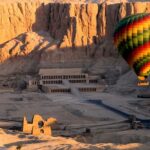
The balloon ride over Luxor: the view you can’t replicate

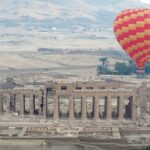
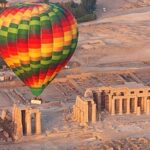
The headline here is the balloon ride, and it’s the part that makes this tour feel like more than just a checklist. From the air, Luxor’s temple complexes and the wider archaeological plain look connected—like the ancient city wasn’t a set of separate monuments, but one system.
You get about 45 minutes of flight time. That duration is long enough to notice patterns: the Nile corridor, the temple ruins laid out in the distance, and the contrast between cultivated areas and protected ruins. It’s also just the right length that you’re not mentally exhausted before the sightseeing begins.
This is when photography becomes less about chasing monuments and more about capturing atmosphere: temple shapes against morning light, the Nile working as the guide’s “main street” below, and soft horizon colors as the balloon drifts. The reviews also underline photo opportunities and the sense that the views feel like a new way to see Egypt.
Quick practical thought: balloons are cool and calm, but you’ll still want layers. Even if it’s warm later, early mornings in Luxor can feel chilly before the sun climbs.
Colossi of Memnon: why these two statues became a story machine

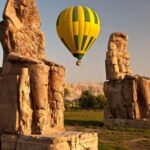
After the flight, the day moves straight into West Bank history. First stop: the Colossi of Memnon. These are two towering stone figures of Pharaoh Amenhotep III, once part of a larger mortuary temple complex. Today, they’re what’s left, standing as dramatic landmarks in the Theban Necropolis.
Two details make this stop special for a first-time visitor:
- They’re about 18 meters (59 feet) tall, so your perspective feels instantly different once you’re standing near them.
- They’re tied to the legend of the Vocal Memnon—people in antiquity believed the statues emitted a humming or whistling sound when sunlight struck them. Whether you buy every ancient explanation or not, it’s a great example of how history turns monuments into long-running myths.
Time on this stop is short (about 15 minutes), so treat it like a fast “anchor point.” Walk in, look up, absorb the scale, and listen to your guide’s story. If you try to do this like an all-day museum visit, you’ll feel rushed. If you treat it like a quick wow-moment, it’s perfect.
Deir el-Bahari and Hatshepsut’s terraces: built for drama
Next you’ll head to Temple of Hatshepsut at Deir el-Bahari, one of the most recognizable West Bank temple designs for its setting. This funerary temple was built into a cliff face in three levels of terraces rising upward—so from the moment you arrive, it feels theatrical.
What I like about this stop is how the design does half the explaining for you. When you see those terraces stacked into the rock, you understand why Hatshepsut’s temple reads as both a political statement and a sacred one. You’ll also see references to chapels, courtyards, and halls decorated with carvings connected to Hatshepsut’s reign.
One “connect the dots” fact worth remembering: a large red granite statue of Hatshepsut is mentioned as being displayed at the Metropolitan Museum of Art in New York. That kind of detail helps you see the temple as part of a bigger story—Egyptology isn’t trapped in one country.
You get around 2 hours here. That’s enough time to enjoy the architecture and still have energy later for Valley of the Kings and the big temple complexes.
Note: entrance is listed as not included for this stop, so keep an eye on what tickets you’ll need day-of.
Valley of the Kings: the time is short, so aim smart
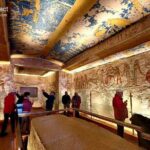
The Valley of the Kings is the West Bank stop people talk about most. It’s where many New Kingdom pharaohs were buried, and it’s packed with tombs—over 60, with most belonging to the 18th, 19th, and 20th dynasties.
This is also where the name Tutankhamun comes in. If you’re expecting a single site to contain the world’s biggest hits, you’re right: the valley is home to famous tombs and the famous “Place of Truth” nickname.
Here’s the practical reality: you usually can’t see every tomb in a single visit, and this tour gives about 2 hours. If your priority is the most famous interiors, your guide can help you pick what’s realistic based on what’s open and your group pace.
What you’ll take away, even without counting every chamber, is the idea of how tightly religion, kingship, and daily life were linked in the New Kingdom burial tradition. The Valley works best when you treat it like an archaeological maze with a purpose, not just a walk through “old rooms.”
Also, as with the earlier West Bank stops, entrance fees aren’t included, so plan for tickets.





Karnak Temple: huge scale, but not random
Then the day shifts to the East Bank and Karnak Temple—a complex dedicated to Amun, Mut, and Khonsu. This place is famous for being massive, but what’s more helpful is understanding it as a long-running building project. The complex grew and changed over roughly 2000 years, from the Middle Kingdom through the Ptolemaic period.
Even if you’re not an architecture nerd, Karnak hits you with scale. It includes major temples and structures, and the complex includes the largest hypostyle hall ever built. That’s the kind of fact that’s easy to remember because it describes the effect: forests of columns, stone surfaces covered in religious meaning, and sightlines that keep pulling you deeper.
Your guide’s Egyptologist background really matters here. Karnak can turn into “I saw a lot of stone” if nobody frames it. With guidance, it becomes a map: which areas were for which gods, how expansions changed the feel of worship, and why the site stayed important for both religion and state power.
You’ll spend about 2 hours here. That’s a solid chunk for Karnak’s size without turning the day into a marathon.
Entrance fees are again not included, so don’t assume you’ll walk in without paying.
Luxor Temple: the classic temple walk you finish with

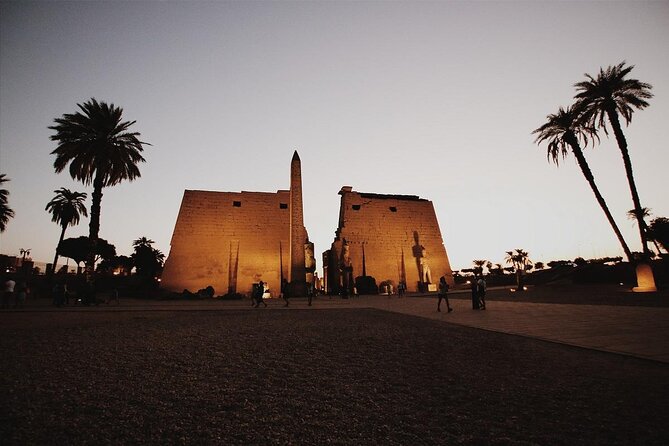
Your final major site is Luxor Temple, built around 1400 BC during the New Kingdom and dedicated to the same core divine trio: Amun, Mut, and Khonsu.
Luxor Temple is known for its entrance statues of Ramses II—two massive figures that act like a greeting committee. Inside, you’ll also find a hypostyle hall with tall columns and carved details, plus a sanctuary—the most sacred area in the complex.
One detail that makes Luxor Temple feel unique: it includes a sacred lake used for purification rites. It’s not just impressive visuals; it’s a reminder that temples weren’t only for ceremonies you watch from a distance. They were part of a working religious system.
The tour also notes Luxor Temple’s historical connection to Karnak by an avenue of sphinxes. Even if you don’t cover that entire route, hearing the connection gives you a mental link between the two big East Bank anchors.
You’ll likely finish the day with enough energy to reflect, not just stumble out. Reviews consistently point to how smoothly the day is organized and how the balloon experience pairs well with the temples afterward.
Price and what $99 buys you in real terms
At $99 per person, this package is priced like a value-forward way to do three big things in one go: a balloon ride, major Luxor temples on both banks, and guided interpretation.
What makes it feel like good value isn’t only the price tag. It’s the combination of:
- Balloon flight (with an included admission ticket listed)
- Hotel pickup and drop-off
- An Egyptologist guide
- A curated East/West route that would take planning and time to stitch together on your own
That said, the package does not include entrance fees, and tipping isn’t included. Entrance can add up, especially if you pay for specific tomb access inside the Valley of the Kings. So the real “cost to book” is $99 plus whatever tickets are needed for the ground stops.
If you’re comparing options, this tour wins when you value structure. In Luxor, the biggest waste is not money—it’s time lost figuring out transport, ticket lines, and which sights are worth your limited daylight.
What you’ll feel by the end of the day
By the end, the day has a clean arc:
- You see Luxor from above in a calm, floating moment.
- You drop into the stories of West Bank kings and queens—Amenhotep III and Hatshepsut.
- You walk through the major power centers on the East Bank—Karnak and Luxor Temple.
That structure is why the balloon-first order works. If you started on stone floors, you might still enjoy it, but you’d miss the “big picture” link that the balloon gives you.
You’ll also walk away with clearer names and relationships. Even from the supplied examples, the guide style gets praised for going beyond surface facts and making people in history feel like they had motives, roles, and beliefs—not just inscriptions.
Who should book this balloon + full-day Luxor temples tour
This is a good fit if you:
- Want one standout activity (balloon) paired with a serious temples day
- Prefer a guide-led route rather than DIY logistics
- Like the idea of covering East and West Bank highlights in a single long day
- Enjoy photography and want early-day light without spending hours planning
It may be less ideal if you:
- Only want a couple of sites and hate long schedules
- Have low tolerance for paying extra entrance fees day-of
- Are hoping for a slow, museum-style pace with lots of downtime
Should you book this tour?
If you want the best answer to the Luxor question—how do I see the temples in a way that feels connected—this is a strong choice. The balloon ride adds a perspective you simply can’t fake from street level. Then the guide-led full-day circuit gives that view context on the ground.
I’d book it if you’re the type who likes momentum and clear planning, and you’re okay with the reality that entrance fees are extra. If that sounds like you, this package is a smart way to turn one day into a real Luxor memory.
FAQ
What is included in the tour price?
The package includes hotel pickup and drop-off, visits to Luxor Temple, Karnak Temple, Valley of the Kings, Hatshepsut Temple, and Colossi of Memnon, air-conditioned transportation, a qualified Egyptologist tour guide, and the hot air balloon. Entrance fees are not included, and tipping is not included.
How long is the tour?
The duration is listed as about 7 to 9 hours.
How long is the hot air balloon ride?
The balloon portion includes about 45 minutes in the air, with an admission ticket included.
Are breakfast and tea included?
Yes. A light breakfast and tea are included as part of the morning start.
Which sites do we visit during the day?
You’ll visit Colossi of Memnon, Temple of Hatshepsut at Deir el-Bahari, Valley of the Kings, Karnak Temple, and Luxor Temple, plus the balloon experience.
Are entrance fees included for the temples and tomb sites?
Entrance fees are not included. The tour notes admission tickets are included for the balloon portion, while other stops show admission tickets as not included.
Can I get a refund if my plans change?
Yes. You can cancel up to 24 hours in advance for a full refund. If you cancel less than 24 hours before the start time, the amount paid is not refunded.