REVIEW · LUXOR
Hot Air balloon w-guided tour toValley of the Kings king tut tom
Book on Viator →Operated by Luxor Travels · Bookable on Viator
King Tut, seen from the sky. This Luxor outing strings together a sunrise hot-air balloon (with pilot commentary) and a guided trek through the Valley of the Kings, built around seeing Tut’s world-famous tomb and several other royal sites. I really like how the ride starts early enough to float over Luxor while you’re still half-asleep, and I also like the certified Egyptologist-style guidance that helps you make sense of what you’re looking at instead of just collecting photos.
The one thing to think about is the early start. Pickup is before sunrise (start time listed as 5:30 am), and the balloon depends on weather, so you’ll want flexibility in your schedule and a plan for possible rescheduling.
In This Review
- Key points before you go
- A sunrise balloon and Tut’s tomb: why this day hits different
- Getting ready for the 5:30 am start in Luxor
- Balloon ride logistics: safety briefing, pilot spotting, and what you’ll see
- Valley of the Kings: using a guide to make tombs make sense
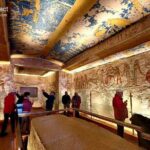
- King Tutankhamun’s tomb: what you’re seeing and why it matters
- Ramses III, Merenptah, and Ramses IV: comparing the royal tomb style
- Tomb of Ramses III (KV 11)
- Tomb of Merenptah (Tomb 8)
- Tomb of Ramses IV
- Colossi of Memnon: connecting Amenhotep III to Tut
- Transport, guide quality, and the details that keep your day smooth
- Price and value: what $100 buys you, and what to verify
- Who this tour fits best
- Should you book this balloon and Valley of the Kings combo?
- FAQ
- What time does the tour start?
- How long is the hot-air balloon ride?
- What is the total time for the Valley of the Kings portion?
- Which tombs does the tour include?
- Is hotel pickup and drop-off included?
- Are entrance fees included?
- How big is the group?
- What happens if balloon conditions are poor?
- When will I get confirmation?
Key points before you go
- 5:30 am start: early pickup before sunrise so you can fly when skies are best
- Balloon flight plus pilot narration: safety briefing, then you drift over the West Bank while your pilot points out monuments
- Valley of the Kings, guided stop-by-stop: Tutankhamun’s tomb and additional royal tombs like Ramses III and Merenptah
- Real tomb details, not vague sightseeing: you’ll get context for scenes and symbols (like Book of Gates and the Litany of Ra)
- Small group limit (up to 20): big enough to meet people, small enough to stay organized
- Air-conditioned transport with hotel pickup/drop-off: the day runs on a schedule, not a scavenger hunt
A sunrise balloon and Tut’s tomb: why this day hits different
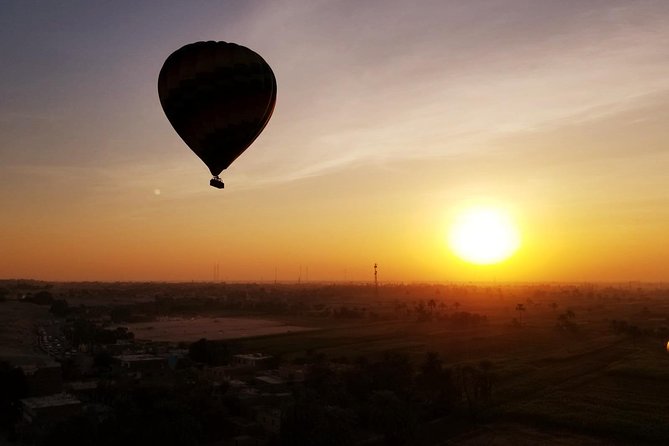
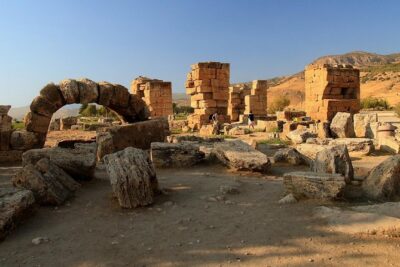
Luxor can be a lot in a single trip: temples, statues, tombs, and more stone gods than you can count. This experience changes the rhythm by starting above the West Bank. The big value isn’t just the balloon itself—it’s what it sets up for the Valley afterward. From the air, Luxor’s ancient Thebes feels like a mapped-out story, with the tomb valleys and monumental areas laid out in front of you.
Then the day shifts into slow, human scale. You’re face to face with the New Kingdom royal world—especially King Tutankhamun—inside tomb spaces where the details were made to be seen up close. If you like getting the why behind the what, the guided portion matters. The tour is built around an Egyptologist guide, and that turns a visit to tomb KV 11, KV 8, and other spaces into something you can actually explain afterward.
You can also read our reviews of more tours and experiences in Luxor.


Getting ready for the 5:30 am start in Luxor
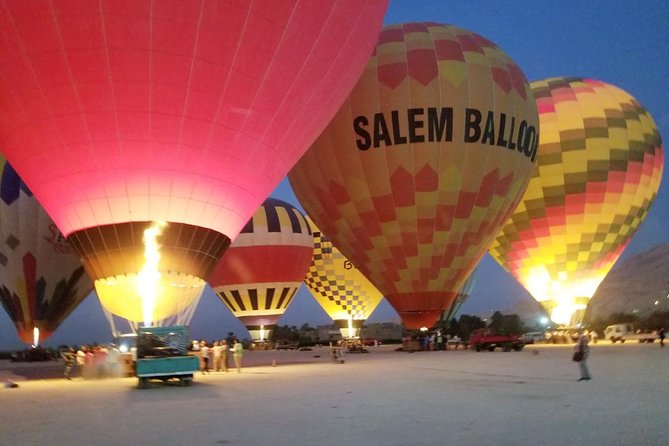
Start time is listed as 5:30 am, and pickup is described as happening early morning before sunrise. That means you’ll want to pack for a transition: cool air for the balloon launch, then warmer sun as the day moves into the Valley of the Kings.
Practical approach:
- Wear closed shoes with grip. Valley paths can be uneven and you’ll likely walk more than you expect.
- Bring a light layer for the early morning, then a way to stay comfortable later (the day does change temperature).
- Have your camera charged. The balloon part is time-limited, and the views over the Thebes monuments are the kind you’ll wish you could replay.
Also plan your expectations: the early start isn’t a downside if you’re willing to trade sleep for quiet, light, and that before-the-crowd feeling. If you’re not a morning person, do a reality check before you book.
Balloon ride logistics: safety briefing, pilot spotting, and what you’ll see
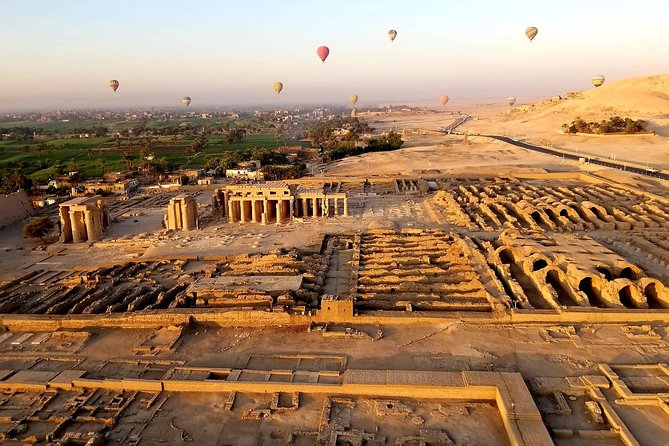
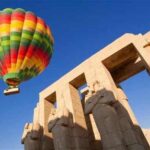
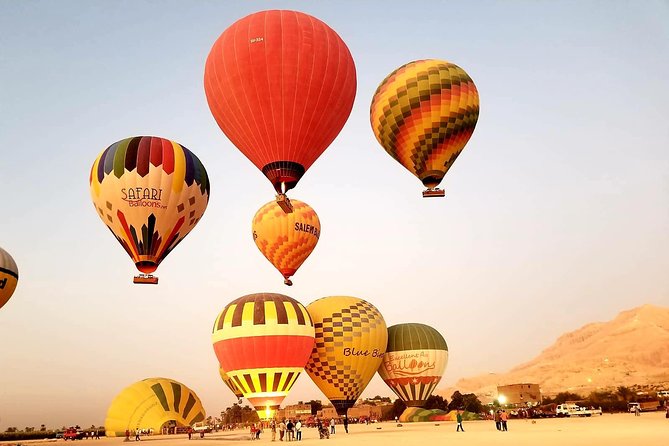
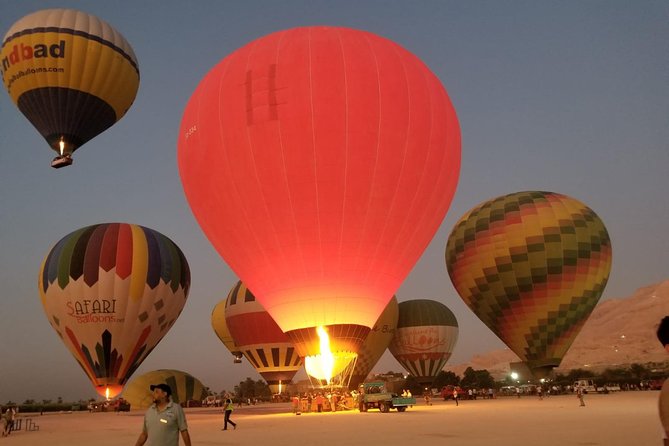
The balloon segment is about 50 minutes. Here’s what the day flow looks like in plain terms: you’re picked up from your hotel, transferred to the West Bank launch area, then you meet the experienced pilot. You’ll get a safety briefing as the crew prepares the brightly colored balloon.
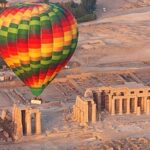
Once you’re up, you’ll drift peacefully over Luxor. The tour description emphasizes that you’ll see most of the ancient monuments of Thebes from above, and your pilot will describe sights and identify points of interest—basically, you’re not just floating; you’re getting guided context in the air.
Two practical notes:
- Balloon tickets can be treated like an add-on depending on the package details. The schedule text shows Admission Ticket Not Included for the balloon stop, so confirm what’s covered by your price before you go.
- The experience requires good weather. If conditions don’t cooperate, the provider indicates you’ll be offered a different date or a full refund (more on this in the FAQ).
Valley of the Kings: using a guide to make tombs make sense
After the balloon, the itinerary settles into the Valley of the Kings on the West Bank of Luxor. This necropolis is the place to go when you want the famous royal tombs of Thebes and the archaeology that surrounds them.
What makes a guided plan valuable here is how many tombs feel similar at first glance. With guidance, you notice what matters: room layout, ceiling iconography, and the way texts and scenes reinforce the afterlife journey. Instead of just reading labels, you can understand why certain walls were painted the way they were and how different reigns left different signatures.
The schedule has a guided structure with multiple tomb stops, and the Valley portion is listed around 2 hours total in the broader plan. The key is that you’re seeing King Tut’s tomb as the anchor, while also getting time in other royal spaces so you can compare styles and eras.
King Tutankhamun’s tomb: what you’re seeing and why it matters
This is the headline stop: Tomb of King Tutankhamun (Tut). The tour describes Tutankhamun’s timeline in simple terms—he ascended the throne around age 10 and died at 19. That youthful reign is part of why his tomb became such a global reference point.
What you’re promised here is the chance to be face to face with his royal mummy in his tomb in the Valley of the Kings. The tour also provides useful context: Tut’s famous golden mask is on display at the Egyptian Museum in Cairo, but in this Valley visit you get to experience the tomb’s original core focus—the mummy and the setting where it was placed.
If you care about value, here’s the real point: you’re not just ticking a famous name. You’re seeing why the discovery mattered and how the tomb’s near-intact state shaped modern understanding of the New Kingdom royal funerary world.





Ramses III, Merenptah, and Ramses IV: comparing the royal tomb style
A big plus of this tour is that it doesn’t stop at one tomb. You move from Tut to other royal reigns, which helps you see the Valley as a system—not a single celebrity site.
Tomb of Ramses III (KV 11)
Ramses III’s tomb is described as KV 11, with decorations that include colourful painted sunken reliefs featuring ritual texts such as the Litany of Ra and Book of Gates, plus scenes of Ramses before the gods. The tour description also calls out something important: unusual secular scenes appear in small side rooms, including foreign tributes, detailed pottery imported from the Aegean, royal armoury scenes, boats, and blind harpists—earning the tomb an alternate name connected to harpists.
That matters because it shows you that royal tomb art wasn’t only theology. It also carried political reach and cultural connections—foreign goods and real-world echoes painted into the afterlife program.
Tomb of Merenptah (Tomb 8)
Merenptah’s tomb (Tomb 8) gets described with myth context: Ptah as demiurge of Memphis, the god of craftsmen and architects, and the mention of his falcon-form deity link. Then the tour text moves into physical tomb layout: the burial place of Pharaoh Merneptah, model aspects of royal tombs, a decrease in lateral rooms, and a dramatic increase in corridor and room heights.
It’s also noted that Howard Carter discovered this tomb in 1903. That gives you a second way to appreciate the site: it’s not only ancient, it’s also part of Egypt’s modern excavation story.
Tomb of Ramses IV
Ramses IV’s tomb is described as highly decorated, with strong color and detail even on the ceiling above the sarcophagi, including Nut stretching across the space. The sarcophagus area is highlighted as one of the largest in the valley, and the tour notes that some paintings have deteriorated, but it remains among the most decorated.
This stop is for you if you like seeing how royal funerary art can feel different even within the same Valley environment—same general mission, different artistic choices.
Colossi of Memnon: connecting Amenhotep III to Tut
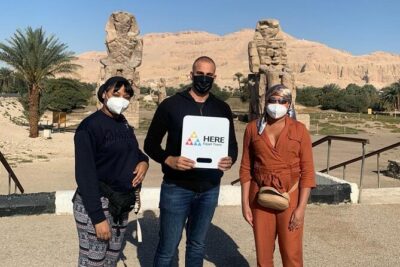
After the tombs, the day includes the Colossi of Memnon, with a listed time of about 25 minutes. These are the two largest ancient statues in Egypt, dating to the era of King Amenhotep III.
Here’s the connection that makes this stop more than a photo stop: Amenhotep III is described as the father of Akhenaten and the grandfather of King Tut. So when you stand before these statues, you’re looking at a family timeline that reaches forward toward Tut’s era.
It’s also a nice palate cleanser after tomb interiors. The Colossi are open-air monuments, and the scale helps you reset your brain before you head back.
Transport, guide quality, and the details that keep your day smooth
This tour includes hotel pickup and drop-off by air-conditioned vehicle, plus a guide and the guided tomb visits. The schedule lists a maximum of 20 travelers, which generally means you won’t feel lost in a huge crowd.
It also helps that the tour is built around an Egyptologist guide. In the experience details you provided, there are examples of guides like Ragab and Mansour Hussain, and a driver named Ramadan mentioned in feedback. One account highlighted that Mansour Hussain completed a four-year collegiate Egyptologist and tour guide program. That kind of training usually shows up in how clearly a guide explains iconography and history without turning it into a lecture you can’t hear.
Two things I recommend you plan for:
- Entrance fees and ticket handling can be confusing in the package details. Some parts of the information say Entrance fees are not included, while other parts state entrance fees for mentioned sites are included. Before you go, confirm what you personally must pay on the spot.
- The balloon is weather-dependent. If you’re traveling with a rigid itinerary, build in a little breathing room for rescheduling.
Price and value: what $100 buys you, and what to verify
At $100 per person, you’re paying for a very time-bound, logistical day: early morning transport, a balloon segment (though ticket coverage may vary), and guided tomb visits plus the Colossi stop.
Where the value really shows is in the combination:
- Balloon flight time is limited and scheduling-based.
- Valley of the Kings needs a guide to turn tomb-walking into understanding.
- Hotel pickup removes a chunk of morning stress.
But don’t let the headline price make you sloppy. Because the provided details conflict on what’s included for entrance tickets and the balloon ticket wording says Admission Ticket Not Included, do this quick check before booking:
- Ask whether the balloon ride ticket is included in your $100.
- Ask whether the tomb entrance tickets are included or if you’ll pay onsite.
That one minute can save you from surprise costs later.
Who this tour fits best
This experience is a strong match if:
- You want the Luxor highlights from both air and ground in one morning-to-afternoon window.
- You like structured guidance through archaeological sites, not just wandering.
- You’re interested in how different royal reigns show up in tomb art and layout.
It’s less ideal if:
- You hate early starts and can’t handle pickup before sunrise.
- You’re traveling on a tight schedule where a weather reschedule would be a problem.
Should you book this balloon and Valley of the Kings combo?
I’d book it if you want a memorable, high-impact Luxor day that mixes wonder (balloon views over Thebes) with a real learning-focused stop (King Tut’s tomb with an Egyptologist guide). The early timing is the main trade-off, and the balloon weather dependency is the main risk—but that’s also why it’s usually such a good experience when it works.
If you decide to go, do two prep moves: confirm what tickets are covered and pack for a cool early morning. Get those right, and this is exactly the kind of Luxor day that makes the history feel close enough to touch—one flight above the monuments, then straight into the tombs.
FAQ
What time does the tour start?
The start time is listed as 5:30 am, with hotel pickup happening early in the morning before sunrise.
How long is the hot-air balloon ride?
The balloon ride is listed as 50 minutes.
What is the total time for the Valley of the Kings portion?
The Valley of the Kings visit is listed as about 2 hours, with separate time blocks for specific tomb stops.
Which tombs does the tour include?
The itinerary includes the Tomb of King Tutankhamun, plus visits to other royal tombs such as the Tomb of Ramses III, the Tomb of Merenptah, and the Tomb of Ramses IV.
Is hotel pickup and drop-off included?
Yes. The tour includes hotel pick up and drop off, with transport by air-conditioned vehicle.
Are entrance fees included?
The details show conflicting information: some parts say entrance fees are not included, while other parts mention entrance fees for the mentioned sites. Confirm what you personally will need to pay at booking.
How big is the group?
The experience has a maximum of 20 travelers.
What happens if balloon conditions are poor?
This experience requires good weather. If it’s canceled due to poor weather, you’ll be offered a different date or a full refund.
When will I get confirmation?
Confirmation is received at the time of booking, and the tour uses a mobile ticket.