REVIEW · LUXOR
Enjoy Hot Air Balloon,Valley of the kings,Hatshepsut temple in Luxor
Book on Viator →Operated by Cupid EgypTravel · Bookable on Viator
Waking up in Luxor for a balloon flight is one of those moves that instantly feels like travel at its best. You get a 40-minute flight with aerial views over the city’s big-name landmarks, then you land and move straight into the West Bank with a real, expert-guided look at the tombs and temples.
I like two things most: the door-to-door hotel pickup and return, and the way your guide can tailor explanations to what you actually care about. The one thing to keep in mind is that the balloon depends on weather, so you’ll want a little flexibility in your schedule even if everything is planned to run fast.
In This Review
- Private Hot Air Balloon Over Luxor: Worth the Early Morning?
- Key Points You’ll Care About
- Hotel Pickup to West Bank: The Day Starts Before the Sun
- The Balloon Flight: What 40 Minutes in the Sky Actually Gives You
- Flying Over the Open-Air Museum: Why the Views Matter
- Valley of the Kings: Tombs, Myth, and the King Tut Factor
- Deir el Bahari and Hatshepsut: The Temple That Feels Like a Statement
- Colossi of Memnon: A Quick Stop That Still Delivers Photos
- The Guides Make the Day: Hatem, Nour, Shaimaa, and More
- Price and Value: What $80 Covers (and What It Doesn’t)
- Timing, Gaps, and How to Keep the Morning from Feeling Scrambled
- Photo Rules and What to Pack for a Balloon + Temples Day
- Should You Book This Luxor Combo?
- FAQ
- How long is the hot air balloon ride?
- What sites are included on the West Bank?
- Are entrance fees included in the $80 price?
- Can I use a camera on the balloon basket?
- What happens if the balloon is canceled due to weather?
- How long is the full tour, and when does it end?
Private Hot Air Balloon Over Luxor: Worth the Early Morning?
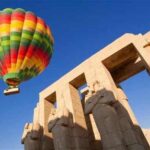
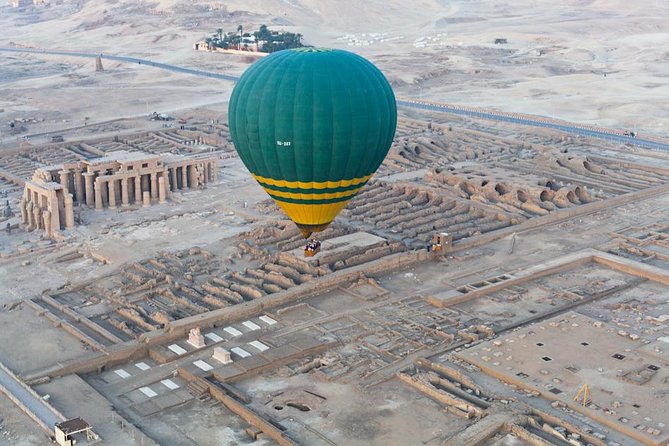
There’s something special about watching Luxor from above while the ground is still waking up. The flight is short on the clock, but long on impact—big views, lots of photo time (with rules), and that rare feeling of floating over history instead of just walking past it.
The bigger win is what happens after landing. You’re not stuck with a generic “look at rocks” tour. You head to the West Bank for three signature stops: the Valley of the Kings, Queen Hatshepsut’s Deir el Bahari, and the Colossi of Memnon—each one explained by a guide who knows how to connect what you’re seeing to how ancient Egyptians thought.
Key Points You’ll Care About
- A dedicated guide experience: you’re guided with a licensed, expert team and your day is structured around major West Bank sights.
- Cruising to the West Bank by boat: you cross by motorboat before the launch area, adding a local touch to the morning.
- Short flight, big views: it’s about 40 minutes in the air, and the timing is built into an all-in morning.
- Photo rules on the balloon basket: cameras aren’t allowed up there; a cellphone is your best tool.
- Entrance fees are extra: budget about $12 per person for all sites, with tips also extra.
- Weather can change the day: you’ll be offered a different date or a refund if the balloon can’t fly.
You can also read our reviews of more tours and experiences in Luxor.


Hotel Pickup to West Bank: The Day Starts Before the Sun
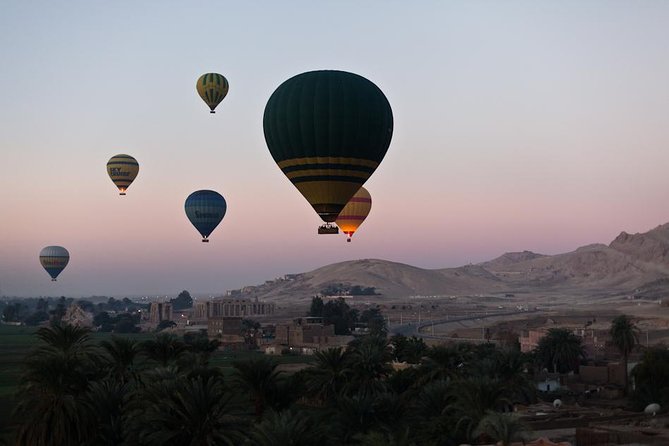
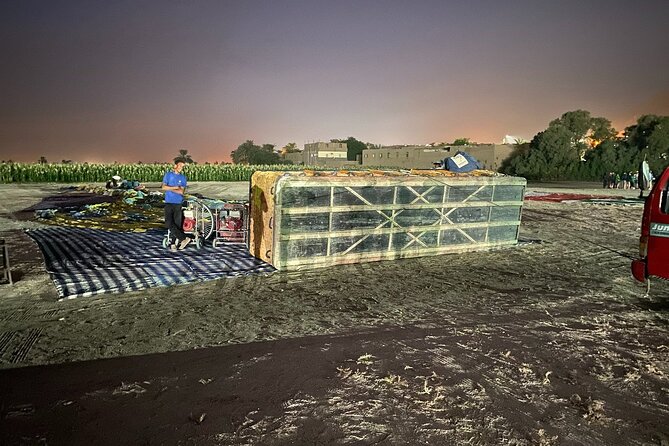
This is an early-morning plan, and it moves with purpose. Your day begins with hotel pickup in Luxor, then you’re transferred by air-conditioned bus toward the crossing area.
Next comes the motorboat part. You’ll take a boat over to the West Bank, which is a nice change from the usual “bus, bus, bus” routine. It also breaks the trip into moments, so you’re not just waiting around in transit.
Once you reach the launch side, the crew gets things rolling and you head to the takeoff area. Pickup timing can shift by season, but you’ll get confirmation of the exact pickup time one day before—so you’re not guessing in the dark.
The Balloon Flight: What 40 Minutes in the Sky Actually Gives You
You’re in the air for about 40 minutes, and that’s the heart of the experience. It’s long enough to take in Luxor’s layout from above, and short enough that you don’t feel exhausted when the rest of the morning hits.
A couple practical notes matter here:
- Cameras aren’t allowed in the balloon basket. Use your cellphone instead for photos.
- The ride is weather-dependent. If conditions don’t allow safe flying, the balloon won’t go up.
From the reviews, I’d also expect smooth coordination around takeoff and landing. People specifically praised the pilot and the ground crew for doing their jobs well, which matters because the balloon morning is a choreography of steps, not just a view.
And yes, you’ll take photos in the moment you’re allowed—because once you’re on the ground, the temples and tombs take over your attention fast.
Flying Over the Open-Air Museum: Why the Views Matter
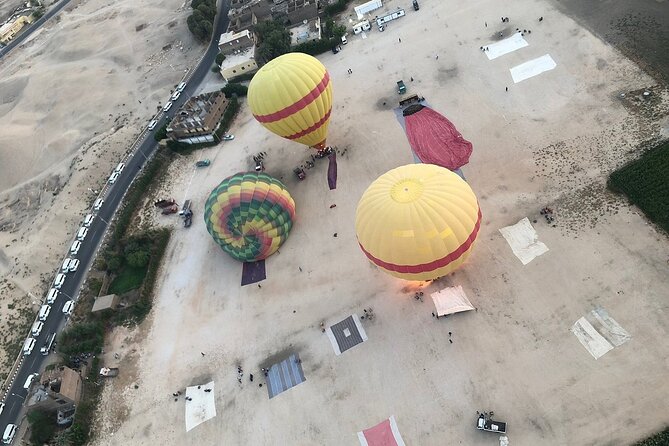
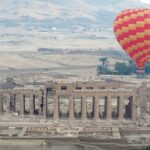
Luxor isn’t just famous because it has ruins. It’s famous because the ruins are placed in a real geography—river, cliffs, valleys, and distance you can’t really appreciate from street level.
From above, you get a better sense of why the West Bank worked the way it did. The Valley of the Kings sits in a dramatic setting, and Deir el Bahari rises with its own commanding shape. When you later stand on the ground, the view from the balloon helps you locate what you’re seeing in a way that makes the walk feel more meaningful.
Also, the balloon is a great equalizer. Even if you’re not a “tomb person” or a “temple person,” everyone reacts to the aerial scale. It’s one of the rare activities in Luxor that doesn’t require any prior knowledge to feel special.
Valley of the Kings: Tombs, Myth, and the King Tut Factor
After the balloon, you head into the West Bank exploration with the Valley of the Kings as the first major stop. The valley has 63 tombs in total, but you won’t see all of them. You’re there to experience the most important ones—and to understand what you’re looking at while you’re there.
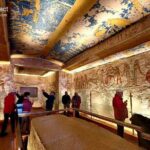
This is where a guide really changes the quality of the visit. You’ll get explanations tied to Egyptian mythology and the belief system of the time. The Royal tombs are decorated in ways that link the art to the way Egyptians imagined the afterlife.
And of course, King Tutankhamun’s connection matters. Even if you only know the name, your guide can put the story into context so it’s not just trivia. The point isn’t to memorize names—it’s to understand why these tombs were built where they were, and what the decoration was trying to do.
One practical drawback: this portion isn’t included in the base ticket cost for admission fees. You should budget for the entrance cost and plan to have cash ready. A reviewer tip was to carry Egyptian pounds for those entrance tickets.



Deir el Bahari and Hatshepsut: The Temple That Feels Like a Statement
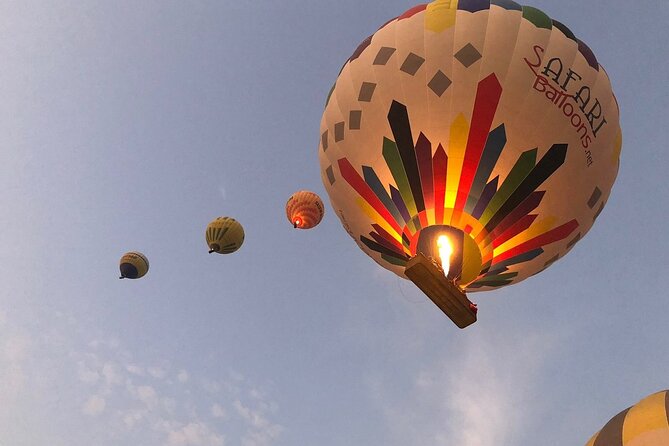
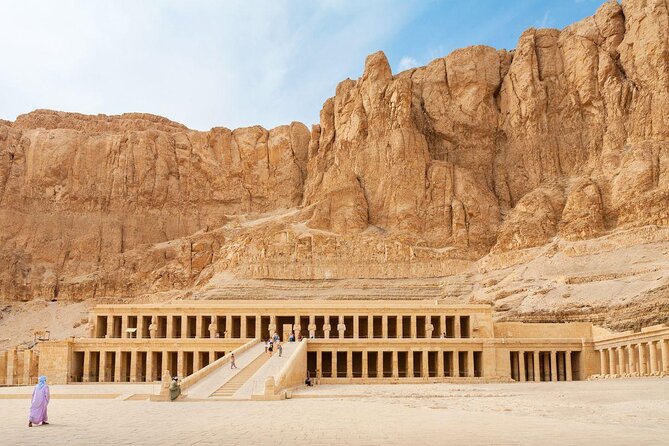
Queen Hatshepsut’s temple at Deir el Bahari is one of the West Bank’s most striking visual sites, and the visit makes more sense after you’ve been high above the valley.
Hatshepsut is often described through the title Queen Hatshepsut—meaning Foremost of Noble Ladies—and you’ll hear about her rule and the ideas connected to trade and routes. That’s a helpful way to think about the temple. It isn’t only ceremonial architecture. It also signals power and ambition.
The visit is about an hour, so you’ll want to stay focused. This is not a “wander until you get bored” stop. It’s a guided look at a place built to communicate, and your guide’s job is to explain the details without turning it into a lecture.
From the guide praise in the reviews, names like Hatem and Walid came up for giving clear explanations and for speaking in a way that makes the carvings feel less abstract. If you get a guide like that, this stop is where the whole day clicks.
Colossi of Memnon: A Quick Stop That Still Delivers Photos
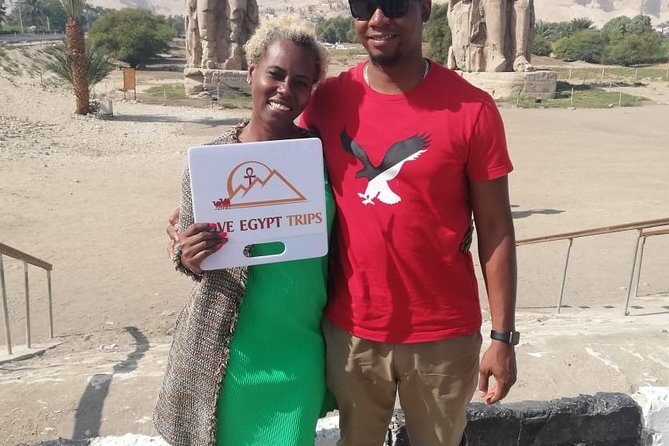
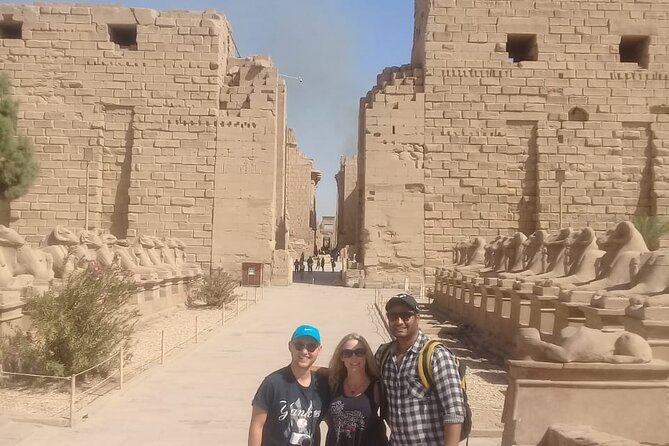
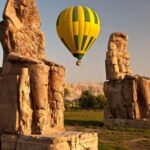
Next up are the Colossi of Memnon. These are huge twin statues made from blocks of quartzite sandstone. They’re famous because of what people thought they were doing historically—guarding the entrance to the Amenhotep memorial temple.
You’ll see them in a time-friendly way, and they’re a strong photo target. Even if you’re temple-tired, the sheer size works on you fast. It’s one of those stops where you can step back, take a few good pictures, and feel like you got your West Bank fix.
One more nice thing: because the statues are a simpler visual target than tomb interiors, this stop works well if you’re traveling with different interests. Some people love the art details; others just want to get the landmark shot. Both groups leave happy.
The Guides Make the Day: Hatem, Nour, Shaimaa, and More
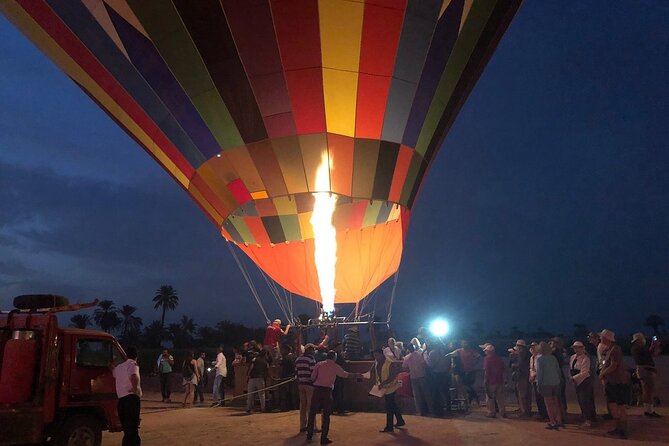
A tour like this lives or dies by the people running it. I’ve found that West Bank sites can turn into a blur if the guide can’t connect the dots.
In this experience, guides were repeatedly praised for both friendliness and explanation style. Hatem was mentioned again and again as a standout—someone who talks through the tomb stories and ties the visuals to meaning. Nour was praised for strong communication, and Shaimaa came up for being friendly and genuinely hospitable.
There were also references to pilots such as Adel and Amr, plus drivers like Mido and Ahmed, which matters because balloon mornings depend on safe, organized movement. If the team is sharp, you spend less time worrying about logistics and more time enjoying the actual moment.
Price and Value: What $80 Covers (and What It Doesn’t)
At about $80 per person, this is priced like an activity plus a guided West Bank day—hotel pickup, air-conditioned transport, and the balloon ride are included. You also get the motorboat transfer, a flight certificate, and the service charges and taxes.
What’s not included is important for budgeting:
- Entrance fees for the sites, roughly $12 per person for all sites.
- Tipping.
- Anything you want beyond the planned stops.
When I judge value, I look at whether you’re getting more than one “big-ticket” moment. You are: a balloon experience and three major West Bank icons with guided context. That combination is why the price feels fair, as long as you budget for entrance fees.
Also, the group size cap helps. The tour has a maximum of 20 travelers, which usually keeps things from turning into a noisy herd.
Timing, Gaps, and How to Keep the Morning from Feeling Scrambled
The whole experience runs about 8 hours and finishes around 1 pm. That makes it a great choice for a first West Bank day, or even as your one big morning before you move on.
One practical thing: there can be a break between the balloon and the temple portion. Some tours drop you back after the balloon and pick you up again for the sites, which means you’ll want to keep your phone charged and be ready for a short wait.
Bring patience. In Luxor, weather and daylight rules the balloon schedule, not your timetable. If the team says the pickup time will be confirmed the day before, trust it, and plan to be ready early.
Photo Rules and What to Pack for a Balloon + Temples Day
Packing is simple, but you need to think about the balloon rules.
- Don’t count on a camera on the basket. Your cellphone is the tool you’ll rely on.
- Wear comfortable shoes for Valley of the Kings and Deir el Bahari.
- Expect an early start, so layers can help—mornings can feel cooler before the heat builds.
If you’re the kind of person who likes to document everything, you’ll still get plenty of chances. Between the balloon aerial views and the photo-friendly Colossi stop, you’ll have lots of visuals to work with.
Should You Book This Luxor Combo?
If you want one morning that checks major Luxor boxes without wasting your time, I’d say this is a strong option. The balloon gives you the wow factor fast, and the West Bank stops are set up so you get context, not just sightseeing.
I’d especially recommend it if:
- You’ve already got Luxor on your list and you want a West Bank day that feels planned and guided.
- You like your history with explanations tied to what you’re standing in front of.
- You’re booking a single half-day block that still feels like a full experience.
I’d hesitate if:
- You have zero flexibility for weather, since the balloon can be canceled for bad conditions.
- You’re hoping for the balloon itself to be fully hands-off in terms of rules, because the camera-on-basket restriction means you’ll adapt your photo plan.
If you do book, pick a guide-driven mindset: ask questions, listen during the tomb and temple moments, and take your photos when you’re allowed. This is one of those days where the best memories come from seeing the same story from two angles—above the valley, then inside it.
FAQ
How long is the hot air balloon ride?
The hot air balloon flight is about 40 minutes.
What sites are included on the West Bank?
You’ll visit the Valley of the Kings, the Temple of Hatshepsut at Deir el Bahari, and the Colossi of Memnon.
Are entrance fees included in the $80 price?
No. Entrance fees are not included and are listed as around $12 per person for all the sites.
Can I use a camera on the balloon basket?
No. A camera is not allowed in the balloon basket. You can use your cellphone to take pictures.
What happens if the balloon is canceled due to weather?
If the hot air balloon is canceled due to bad weather, you’ll be offered a different date or a refund. The stated refund amount is 30 USD per person.
How long is the full tour, and when does it end?
The tour duration is about 8 hours, and it finishes around 1 pm.