A Nile cruise with hot air balloon is a rare two-for-one. You’ll move through ancient Egypt at a comfy pace: temples on land, sailing by night, and big “wow” moments timed for the best light. The whole trip is set up for you to relax between stops, with a cabin that includes everyday comforts and meals that keep showing up right when you need them.
I especially like the balance here: you get major sites like Karnak, Luxor Temple, the Valley of the Kings, Edfu, and Philae, but you also get downtime on the boat. I also like that meals run through the days, starting with lunch on day 1 and ending with breakfast on day 5, so you’re not hunting for food between early excursions.
One consideration: entrance fees are not included, so you’ll want to budget extra for tickets at places like Karnak, Luxor Temple, the Valley of the Kings, and Edfu/Kom Ombo/Philae.
In This Review
- Key highlights I’d plan around
- First impressions: Luxor to Aswan, but with a slower rhythm
- Day 1: Karnak and Luxor Temple, then check in to your Nile base
- Karnak Temples: the Amun power center
- Luxor Temple: Amun-Ra, Ramesses II, and a dramatic entrance
- Optional Luxor market and Corniche stroll
- Day 2: Sunrise balloon over Luxor, then West Bank icons
- Hot air balloon: why this matters more than a quick photo
- Valley of the Kings: pharaoh tombs with optional King Tut time
- Temple of Hatshepsut at Deir el Bahari: Egypt’s female pharaoh in stone
- Colossi of Memnon: quick photo stop, big impression
- Day 3: Edfu’s Horus temple, then Kom Ombo with its double focus
- Temple of Horus at Edfu: a well-preserved Ptolemaic statement
- Temple of Kom Ombo: Sobek and Horus in symmetry
- Day 4: Aswan’s modern Nile power + Philae’s relocated masterpiece
- Aswan High Dam: the Nile as engineering, not just legend
- Temple of Philae on Agilkia Island: Isis and the relocation story
- Day 5: disembark after breakfast, plus Abu Simbel or Nubian Village options
- Your final options in Aswan
- Cabin comfort and meals: the part you feel every day
- What the included guide actually gives you
- Price and value: $595 is the “package price,” not the full budget
- Who this Nile cruise fits best
- Should you book it? My take
- FAQ
- How long is the Nile cruise from Luxor to Aswan?
- Are hotel or station pickups included?
- Is the hot air balloon ride included?
- What meals are included during the cruise?
- Are entrance fees to the temples included?
- Is an Egyptology guide included?
- Can the tour accommodate dietary restrictions?
- What happens on the last day in Aswan?
- Is the tour cancellable for a full refund?
Key highlights I’d plan around
- Hot air balloon over Luxor at sunrise for temple-and-desert views you can’t get from the ground
- Egyptology guide at the main historical stops, with context that turns ruins into real stories
- Four-night sailing from Luxor to Aswan, which breaks a long route into manageable daily pieces
- Philae Temple + Aswan High Dam pairing ancient worship with modern Nile engineering
- Edfu and Kom Ombo with two very different temple designs and dedicated focus on Horus
- All taxes/service charges included, plus air-conditioned transfers and meet-and-assist support
First impressions: Luxor to Aswan, but with a slower rhythm
This trip is built around a simple idea: instead of rushing between sites all day and all night, you sleep on the Nile. That means your “in-between time” becomes part of the experience. You’ll check in to your cruise after your first day of temple visits, and then the river journey carries you toward the next set of monuments.
The pace is practical. You’ll do a strong chunk of sightseeing in the morning and early afternoon, then return to the ship for lunch (and more relaxing time later). That matters in Egypt, where heat, crowds, and ticket lines can sap energy fast. Here, the schedule gives you a place to reset.
Also, the experience is clearly set up to reduce friction. You get meet-and-assist support and air-conditioned transfers between your arrival point and the ship. Add in the fact that the cruise includes a comfortable cabin with amenities, and you’ve got a trip that feels organized rather than improvised.
You can also read our reviews of more tours and experiences in Luxor.


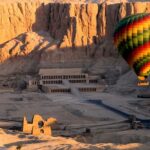
Day 1: Karnak and Luxor Temple, then check in to your Nile base
Day 1 starts strong on the East Bank with the two big Luxor hitters. Both stops are timed for the kind of visiting you want early: long enough to see the scale, not so long that you lose the thread of what you’re looking at.
Karnak Temples: the Amun power center
At Karnak, you’re walking through a place built for devotion to Amun and Mut. What makes Karnak feel different from many other “big temples” is how layered it is—this site is tied to long stretches of ancient Egyptian belief and royal attention. Even better, there’s a standout detail: the presence of an early international peace treaty inscription linked to Amun’s temple walls.
One practical note: the stop is listed for about 2 hours, and the admission ticket isn’t included. You’ll want to have the ticket situation sorted so your guide can keep you moving at a good pace instead of waiting around.
Luxor Temple: Amun-Ra, Ramesses II, and a dramatic entrance
Next comes Luxor Temple, dedicated to Amun-Ra, with references to Mut and Khonsu. The temple’s history spans major rulers, including Amenhotep III and Ramesses II. Don’t miss the entrance area with the Obelisk of Ramesses II—it’s the kind of feature that gives you a clear “anchor” for photos and orientation.
Like Karnak, the listed time is about 2 hours, and entrance fees aren’t included. So treat day 1 as: temple immersion first, then cruise comfort right after.
Optional Luxor market and Corniche stroll
After the temples, the schedule offers an optional, self-guided break: Luxor market and the Corniche riverside walk. This is your low-pressure window to nibble local flavors and pick up small souvenirs (spices, crafts, the typical stuff). If you like seeing how daily life fits beside monuments, this is where that happens.
The benefit is freedom. It’s listed as optional and about 2 hours, so you can match it to your energy level.



Day 2: Sunrise balloon over Luxor, then West Bank icons
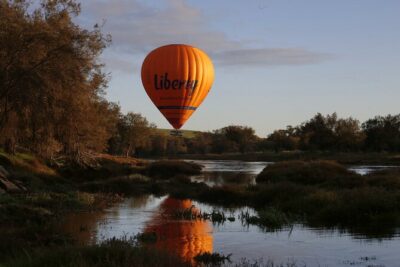
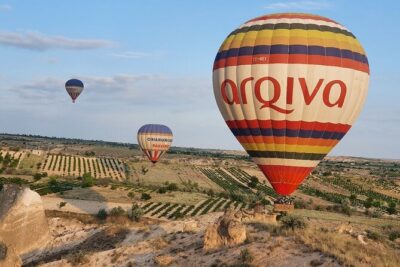
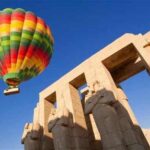
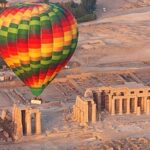
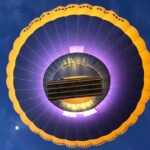
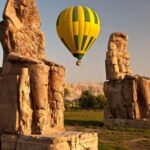
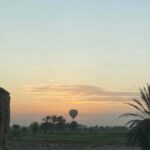
If there’s one day you’ll remember with your camera full, it’s day 2. You’ll start early for the hot air balloon ride—45 minutes of sunrise flying over desert, tombs, temples, and the Nile itself. The view angle is the magic here. From ground level, the scale can trick you; from the air, the whole region makes visual sense.
Hot air balloon: why this matters more than a quick photo
This balloon ride is included, and the timing is the reason. Sunrise light helps the scenery look softer and clearer, and you’re likely to spot the temple structures and river bend in one frame. It also sets an emotional tone for the rest of the day: you get a “top-down Egypt” moment before heading back to the ground with human-scale monuments.
Practical tip: wear layers. Early morning can feel chilly, even if you know the afternoon will be hot.
Valley of the Kings: pharaoh tombs with optional King Tut time
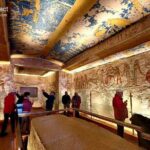
After ballooning, you cross to the West Bank for the Valley of the Kings. This is where you go to connect with ancient royal power through the tombs built for eternity. You’ll have a listed 3 hours, with an optional visit to King Tutankhamun’s tomb.
Entrance fees aren’t included here, so plan for ticket time. Also, decide in advance if you want the optional King Tut stop; it can add stress if you’re trying to move at a steady rhythm.
Temple of Hatshepsut at Deir el Bahari: Egypt’s female pharaoh in stone
Next is Deir el Bahari and the Temple of Hatshepsut, a striking complex devoted to Egypt’s only female pharaoh. The temple’s design works with the limestone cliffs, so you’re not just looking at a building—you’re looking at how ancient architects used the setting to make a statement.
This is listed for 2 hours, and again, entrance fees aren’t included.
Colossi of Memnon: quick photo stop, big impression
You’ll also stop at the Colossi of Memnon for a 30-minute photo window, then head back for lunch on the cruise. This is one of those moments where you don’t need long explanations. You look, you photograph, you move on—then the day refills your energy with food and river time.
Day 3: Edfu’s Horus temple, then Kom Ombo with its double focus
Day 3 keeps building the “temple story,” but in a different way than day 2. Today is about two major temple complexes with clear identities: one for Horus, one split between Horus and Sobek.
Temple of Horus at Edfu: a well-preserved Ptolemaic statement
At Edfu, you’ll visit the Temple of Horus, dedicated to the falcon god. The temple is from the Ptolemaic period, and you’ll spend about 3 hours. The reliefs, courts, and hallways are described as impressively preserved, and that matters because it helps you read what you’re seeing instead of guessing.
Expect the guide to connect symbols to meaning—this is where “context” becomes practical. Without it, a temple can feel like walls and carvings. With it, the place starts acting like a book.
Entrance fees aren’t included, so factor in ticket time when you arrive.
Temple of Kom Ombo: Sobek and Horus in symmetry
Then comes Kom Ombo, a temple dedicated to Sobek (the crocodile god) and Horus the Elder. The notable feature here is the symmetrical layout, including two entrances, courts, and sanctuaries.
This stop is also about 3 hours, with entrance fees not included. From a value perspective, this pair of temples is excellent: Edfu gives you Horus in a single dominating frame; Kom Ombo gives you a temple designed to present two divine angles in one visit. It’s a smart use of time.
After the guided time, you sail on toward Aswan, which keeps your schedule from feeling like nonstop walking.
Day 4: Aswan’s modern Nile power + Philae’s relocated masterpiece
Day 4 is the day where the trip widens its lens. You’re not only seeing monuments from ancient Egypt—you’re also seeing the Nile as modern infrastructure. Then you cap the day with Philae Temple, famous for being saved from flooding by relocation.
Aswan High Dam: the Nile as engineering, not just legend
First stop is the Aswan High Dam, described as an engineering marvel that controls Nile flooding and supports hydroelectric power. It’s an important counterpoint to the ancient sites. The Nile shaped Egypt’s civilization for millennia, and today it still shapes daily life—just through different tools and priorities.
This is listed for 2 hours, and entrance fees aren’t included.
Temple of Philae on Agilkia Island: Isis and the relocation story
Next is the Temple of Philae, dedicated to Isis. The key detail is that it was relocated to Agilkia Island to save it from flooding. That relocation history adds a layer of meaning to your visit. You’re seeing not just art and architecture, but also the fact that people decided this heritage was worth moving rather than losing.
You’ll have about 2 hours here. Entrance fees aren’t included, so don’t forget that part of the day’s budget.
Day 5: disembark after breakfast, plus Abu Simbel or Nubian Village options
The trip ends with breakfast and disembarkation in Aswan. The schedule gives you choices, which is helpful because not everyone wants the same final-day push.
Your final options in Aswan
After breakfast, you can choose among:
- Abu Simbel (optional)
- Visit a Nubian Village (optional)
- Explore Aswan at your leisure
This is a nice way to tailor the last hours to your interests. If you want one more big monument, Abu Simbel tends to be the natural pick. If you want culture and community life, the Nubian Village option fits well. If you just want quiet, Aswan time on your own can be a relief after several days of structured sightseeing.
Entrance fees aren’t included, and the optional stops are not described with included inclusions besides being available to choose from.
Cabin comfort and meals: the part you feel every day
This cruise isn’t just about monuments. Your cabin and meals are a big part of why the whole thing works.
You’ll sail with a comfortable cabin equipped with amenities, which matters because you’ll spend time there between excursions. Even if you’re not a “hang out on the boat” type, you’ll appreciate having a clean, air-conditioned space to cool off and recharge.
Meals are consistently handled: lunch on day 1 through dinner on day 4, and breakfast on day 5. That’s a practical win. It keeps you from losing sightseeing time to meal planning and it makes the schedule feel stitched together rather than pieced.
What the included guide actually gives you
You’ll have an expert Egyptology guide at the historical sites called out in the program. That’s more than a nice-to-have.
Here’s what I’d expect you to gain:
- Clear explanations of who and what the temples honor (Amun at Karnak and Luxor; Horus at Edfu; Sobek and Horus at Kom Ombo; Isis at Philae)
- Connections between architecture and belief (like how Hatshepsut’s temple works with the cliffs)
- A sense of time—how different dynasties and periods show up in the same region
One of the best-value reasons to go guided is that Egypt rewards attention. If you’re the kind of person who likes to understand what you’re seeing, the guide turns “a bunch of stones” into a coherent story.
And yes, the balloon day gives you that visual context from above, but the guide gives you the meaning once you’re on the ground.
Price and value: $595 is the “package price,” not the full budget
At $595 per person, this tour can feel like a deal because it bundles several expensive-feeling components: the 4-night Nile cruise, the included hot air balloon, guided visits, and onboard meals. You also get air-conditioned transfers plus meet-and-assist support, and all taxes/service charges are included.
But there’s a key budgeting detail: entrance fees are not included. That means your final “all-in” total will depend on ticket costs at Karnak, Luxor Temple, Valley of the Kings, Deir el Bahari, Edfu, Kom Ombo, High Dam, Philae, and any optional sites.
So how do you judge value?
- If you want a smooth, guided, meal-included way to cover Luxor to Aswan without organizing transport and timing yourself, the package price makes sense.
- If you’re the type who hates paying separate tickets and you’re trying to keep a very tight cash budget, you’ll need to plan that entrance-fee layer carefully.
Who this Nile cruise fits best
This is a strong match if you want:
- A structured route between Luxor and Aswan with guided temple time
- The included sunrise balloon rather than taking a chance on separate bookings
- A comfortable cruise base with meals handled for you
- A trip that moves daily but still leaves room to breathe
Most travelers can participate, and dietary restrictions like vegetarian, vegan, or gluten-free can be accommodated. If you’re traveling as part of a private group, the tour notes it’s private in the sense that only your group participates.
Should you book it? My take
I’d book this Nile cruise if you want an efficient Luxor-to-Aswan plan where the big elements are handled: transfers, guides, meals, a comfortable cabin, and one unforgettable add-on (the balloon). The itinerary covers the core must-sees and mixes in useful variety—West Bank tombs, Edfu and Kom Ombo’s temple contrasts, then Aswan’s modern Nile story plus Philae’s relocation.
I’d think twice if entrance fees would be a deal-breaker for your budget, since they’re clearly not included. Also, if you strongly prefer self-guided travel with no set schedule, the guided structure may feel a bit “too organized,” especially on the days packed with temples.
If you’re aiming for a trip that feels both relaxed and meaningful, this one has the right ingredients.
FAQ
How long is the Nile cruise from Luxor to Aswan?
The experience is about 5 days in total, including a 4-night Nile cruise from Luxor to Aswan.
Are hotel or station pickups included?
Yes. Pickup is offered, and you also get air-conditioned transfers between your arrival/departure point and the cruise ship.
Is the hot air balloon ride included?
Yes. The hot air balloon is included in the tour.
What meals are included during the cruise?
You get delicious meals onboard starting with lunch on day 1 and ending with breakfast on day 5 (including lunch, dinner, and breakfast as listed).
Are entrance fees to the temples included?
No. Entrance fees are listed as not included for the historical sites in the program.
Is an Egyptology guide included?
Yes. An expert Egyptology guide is included for the historical sites in the program.
Can the tour accommodate dietary restrictions?
Yes. Dietary restrictions like vegetarian, vegan, and gluten-free can be accommodated.
What happens on the last day in Aswan?
After breakfast you disembark, with options to tour Abu Simbel, visit a Nubian Village, or explore Aswan at your leisure.
Is the tour cancellable for a full refund?
Yes. Free cancellation is available if you cancel up to 24 hours in advance for a full refund.