REVIEW · ASWAN
3-Nights Cruise From Aswan To Luxor, Hot Air Balloon,Abu Simbel
Book on Viator →Operated by Fayrouz Egypt Travel · Bookable on Viator
Nile calm, temples, and a balloon flight. This Aswan-to-Luxor cruise packs in the big Upper Egypt names: Abu Simbel, Kom Ombo, Edfu, the West Bank classics, plus a hot-air balloon early in Luxor. You also get a guided, day-by-day rhythm with door-to-door transfers, so you spend less time figuring things out and more time looking at real monuments.
I especially like the way the day tours are built around Egyptian history with a qualified Egyptology guide, not just a driver-and-a-ticket setup. I also like that meals are handled for you onboard—breakfast, lunch, and dinner are included across the 3 nights—so your logistics stay simple even with early starts.
One possible drawback: some highlights run on strict timing and weather dependence. Balloon flights and the Abu Simbel trip can be affected by conditions, and entrance fees are not included (you’ll pay on the ground).
In This Review
- Key things to know before you go
- Aswan to Luxor by Cruise: what this 3-night package really buys you
- Day 1 in Aswan: Philae by motorboat, the High Dam, then an easy check-in
- Day 2: Abu Simbel’s big entrance, then Kom Ombo’s unusual dual-deity setup
- Day 3 in Edfu: Temple of Horus at the right pace, before the full Luxor push
- Day 4 in Luxor: balloon at dawn, then Valley of the Kings and the big temples
- Valley of the Kings: why it’s more than a single tomb visit
- Hatshepsut’s temple at Deir el Bahari: architecture you can feel
- Colossi of Memnon: giant scale, quick stop, strong atmosphere
- Karnak and Luxor Temple: the east bank finale
- Meals and ship comfort: how included dining helps you enjoy the schedule
- Entrance fees, payment methods, and the one thing you should confirm upfront
- Value and price: why $349 can make sense or feel tight
- Who this fits best: fast history lovers, first-timers, and budget-conscious groups
- Should you book this Aswan to Luxor cruise with Abu Simbel and a balloon?
- FAQ
- What is included in this tour price?
- Are entrance fees included?
- Is the hot air balloon included, and what are the rules?
- Does the tour include pickup and transfers?
- What happens if Abu Simbel is canceled due to weather?
- What happens if the hot air balloon is canceled due to weather?
- When does the tour end in Luxor?
Key things to know before you go
- Hot-air balloon launch time in Luxor: you’re getting up around 4:30 am for the balloon ride.
- Abu Simbel is part of the package, not an optional extra, but it can be canceled/refunded if weather turns bad.
- Boat-to-temple transfers are included: you’ll use a motorboat for Philae and travel between sites by air-conditioned vehicle.
- Your day is full, not slow: expect temple time, then more temple time, with long days built in.
- You’ll pay most entrance fees separately, with High Dam and the Philae motorboat paid in cash.
- Private group feel (max 15 travelers): it’s only your group, not a giant mixed crowd.
Aswan to Luxor by Cruise: what this 3-night package really buys you
This is a classic Nile route with a modern twist: you’re not just cruising while the itinerary happens around you. The structure is built for momentum—Aswan first, then Abu Simbel and Kom Ombo, then Edfu, and finally Luxor plus the West Bank. That’s great if you want to see Upper Egypt’s headline sites without the stress of coordinating buses, guides, and timed tickets yourself.
The value here isn’t only the list of places. It’s the daily support: you get hotel/port pickup and drop-off, plus an Egyptology guide who’s meant to connect the dots between temples, dynasties, and “why this matters.” And because meals are included for the cruise nights, you avoid the usual Egypt problem where you’re hungry, thirsty, and late at the same time.
Still, you should go in with realistic expectations. This isn’t a slow sightseeing walk. It’s more like a well-paced art museum tour—just with desert sun, uneven stone steps, and the occasional early-morning wake-up.
You can also read our reviews of more tours and experiences in Aswan.
- 4-Days Nile Cruise From Aswan To Luxor including Abu Simbel and Hot Air Balloon
★ 5.0 · 3,142 reviews
Day 1 in Aswan: Philae by motorboat, the High Dam, then an easy check-in
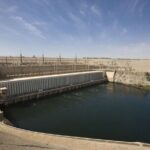
Day 1 starts with Aswan’s iconic riverside energy and a temple visit that feels like it belongs to the Nile itself. You’ll be picked up in Aswan, then go by motorboat to Philae Temple, one of the most atmospheric temple settings on the river. After that, you’ll head to the Aswan High Dam, a modern landmark with huge historic weight.
The High Dam is not just a viewpoint stop. It’s a massive engineering project: about 3,600 meters long, roughly 111 meters high, built during the era of Gamal Abdel Nasser with Soviet help. It helped control flood cycles and improved water regulation for Egypt, plus it generates electricity. For me, the best part of stops like this is contrast: you go from ancient sacred river worship to a 20th-century system that reshaped daily life across decades.
In the evening, you’ve got time to be in Aswan before you check in on the cruise. The itinerary even leaves room for a walk through the local market scene. Then you settle into ship life for the night—simple, comfortable, and ready for tomorrow’s long day.
Practical note: your itinerary lists a few activities where admission is not included, so you’ll want to plan for entrance-fee payment on arrival (and remember you’ll pay High Dam and the Philae motorboat in cash).
Day 2: Abu Simbel’s big entrance, then Kom Ombo’s unusual dual-deity setup
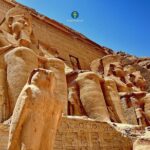
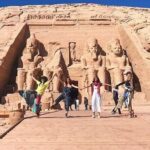
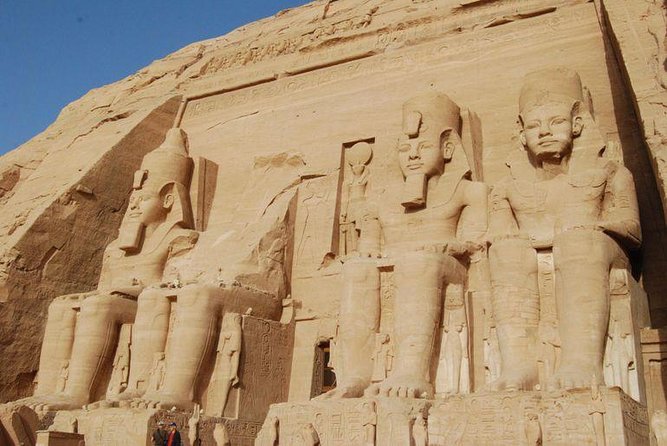
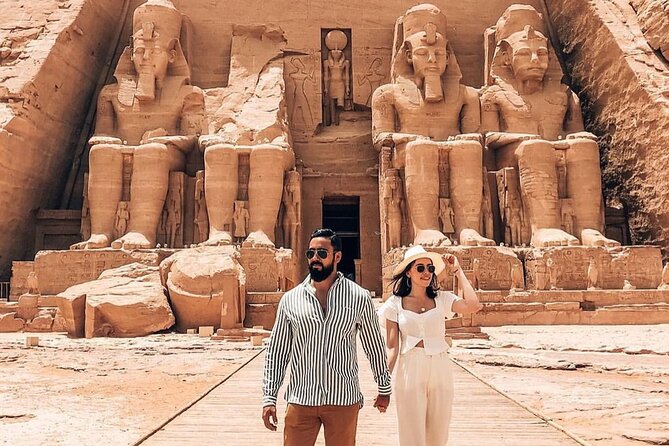
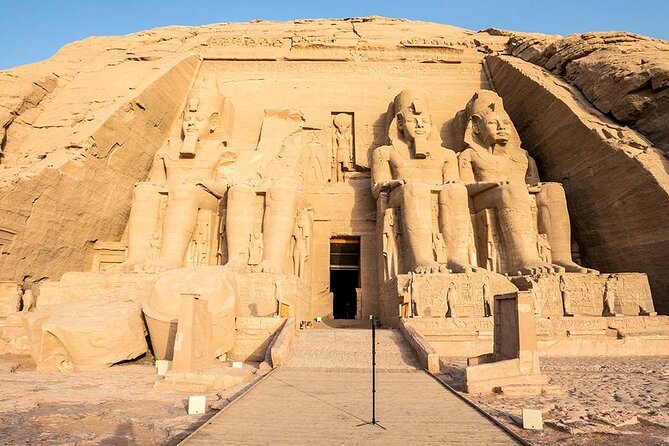
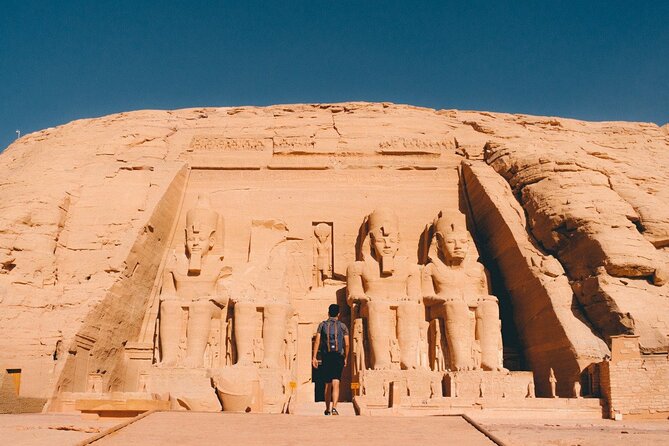
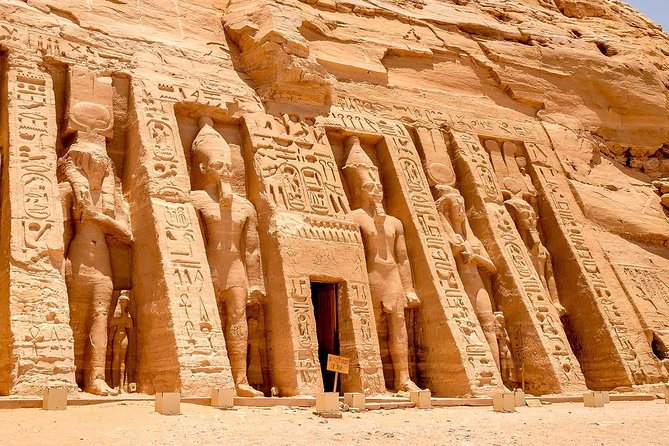
Day 2 is the heavy hitter. You’ll go to Abu Simbel, known as the “Ramses Temple” linked to Amun. This complex was built roughly from 1244 BC to 1223 BC over about 21 years, during Ramses II’s reign, and it was meant to project power and reinforce religious authority far into southern Egypt.
What makes Abu Simbel special in practice is scale and drama. Even if you’re not a hardcore Egypt nerd, you can feel the effort behind carving monumental temples into rock. And because it was later covered by sand and then uncovered again over history, the site carries that layered sense of survival that makes the visit more than just looking at old stone.
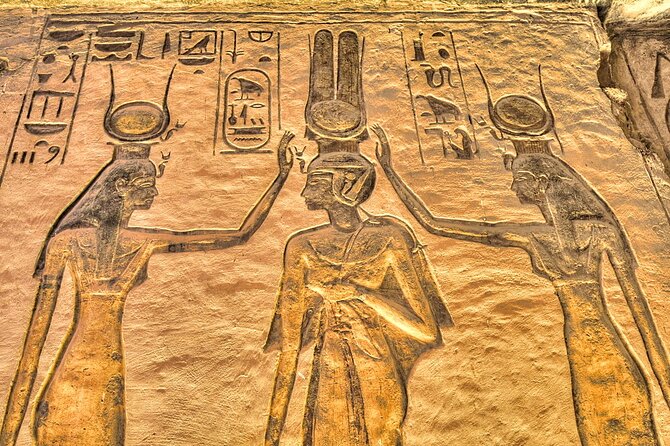
After Abu Simbel, you’ll continue to Temple of Kom Ombo. This is one of those temples that rewards attentive looking. The complex was established during the Ptolemaic era, with later Roman-era decoration. The standout detail is the temple’s relationship to two local divine figures—Subic and Horus-headed—who are presented side by side without mixing. That creates a layout you won’t see at every site, so keep your eyes open for the temple’s internal symmetry and planning.
This day can feel long. That’s the trade-off for getting Abu Simbel included in a package without adding another hotel night or travel day. If you hate packed schedules, this will test you. If you love checking major sites off your list with guidance, it’s worth the effort.
Day 3 in Edfu: Temple of Horus at the right pace, before the full Luxor push
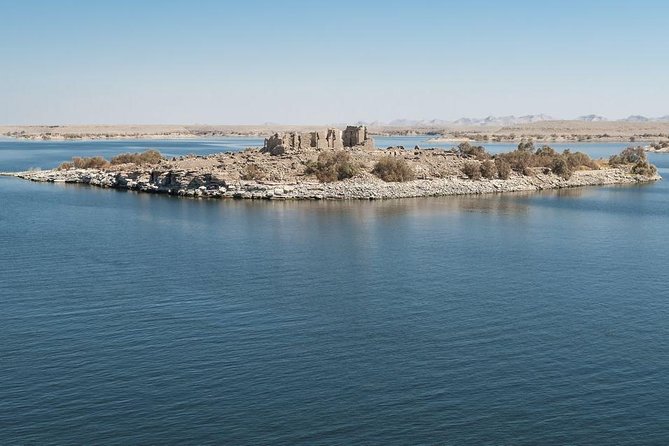
Day 3 shifts to Edfu for the Temple of Horus. You’ll visit early, around 5:00 am readiness in the schedule. Edfu’s temple is the kind of place where morning light can make carvings easier to read, and the quieter hours can make your guide’s explanations land better.
Edfu has been known through different eras and names—what the Greeks and Romans called it (Apollinopolis Magna) shows you how old these cultural layers are. In pharaonic terms, Edfu sat under the protection of the falcon deity Horus. If you like how temples reflect political geography, you’ll enjoy the way Edfu was positioned as a key center in Upper Egypt.
Archaeology also adds texture to your understanding of the site. Excavations have revealed importance from very early periods, including an Old Kingdom cemetery and tomb terraces associated with ancient burial practices. Even without going deep into academic language, this helps you see that the temple wasn’t built in a vacuum.
You’ll spend time at the temple itself, then continue back toward the cruise rhythm so you’re not completely cooked for the Luxor day. It’s a good staging day: temple morning, controlled pace, and a chance to recharge for the West Bank and Luxor evening highlights.
Day 4 in Luxor: balloon at dawn, then Valley of the Kings and the big temples
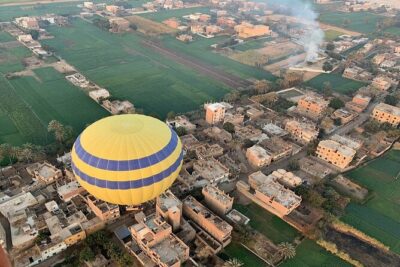
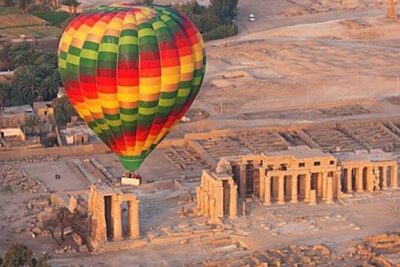
Day 4 is the “wow” day. It starts with hot-air balloon pickup around 4:30 am. This is one of the most memorable ways to understand Luxor’s layout: you’re seeing the city and river from above while the world is still quiet.
Two key rules are worth planning for:
- Camera gear is not allowed in the balloon basket. You can use your cellphone to take pictures.
- Children under 6 are not allowed for the balloon trip.
Weather matters a lot. If the balloon is canceled due to bad weather, there’s a refund structure—$25 per person and $12.50 for a child (as listed in the tour details).
After the balloon, you’ll head into the West Bank day: Valley of the Kings, Hatshepsut at Deir el Bahari, the Colossi of Memnon, and then you finish on the east bank with Karnak and Luxor Temple.
Valley of the Kings: why it’s more than a single tomb visit
The Valley of the Kings (Valley of Biban Kings) is where royal burials happened over about 500 years, between the 16th and 11th centuries BC. It sits on the west bank facing Thebes (modern Luxor). It’s divided into two valleys, with most royal tombs in the eastern valley.
Even if you don’t go into every tomb, the setting does the heavy lifting. You’re walking in a funerary landscape built for secrecy and symbolism, and your guide’s context helps you read what you’re seeing: not just tomb doors, but an entire system of belief and power.
Hatshepsut’s temple at Deir el Bahari: architecture you can feel
Deir el Bahari gives you one of the most visually distinct temple designs in Egypt. Hatshepsut’s temple is built with three successive terraces—open, stepped levels that feel designed for light and sightlines, not just worship. It was built by Queen Hatshepsut on the west bank opposite what was Taiba (the seat of worship of Amun). The temple was made of limestone and includes notable statue placements connected to Osiris and Hatshepsut.
If you love places where the design matches the story, this is a strong stop. It’s not only “ancient stuff.” It’s a statement—built to last.
Colossi of Memnon: giant scale, quick stop, strong atmosphere
Then you’ll see the Colossi of Memnon—two huge statues linked to Amenhotep III. They stand around 19 meters tall, and they’re what remains of a larger temple complex. The Greeks even gave them the name Memnon, and the legend explains the “voice” story when the statue cracked, producing a sound at dawn. Whether you treat the legend literally or as folklore, it adds atmosphere fast.
This is a shorter stop, but it’s one of those moments where you look up and go, okay—this is real scale, not a model.
Karnak and Luxor Temple: the east bank finale
You end with two major sites on the east bank.
Karnak Temple Complex is huge and long-lived. Construction stretched from the Middle Kingdom kings into Roman-era additions. The complex is tied to the divine family concept: Amun (Amun-Ra), Mut, and Khonsu. The name Karnak comes from Arabic, tied to a fortified village idea, so even the naming reflects layers of time.
Then it’s Luxor Temple, founded around 1400 BC for Amun Ra and the Theban triad. The two biggest building waves you’ll hear about are those associated with Amenhotep III and Ramses II, with later elements added by Thutmose III. You get the practical payoff of this finish: you see how Luxor functioned as a living sacred center, not only a tomb destination.
Meals and ship comfort: how included dining helps you enjoy the schedule
This package includes meals onboard: breakfast, lunch, and dinner across the 3 cruise nights, with lunch starting on the first day and breakfast ending on the last. That sounds basic until you remember the alternative—paying for food while trying to keep up with early mornings and timed temple visits.
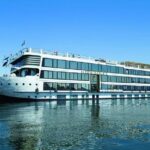
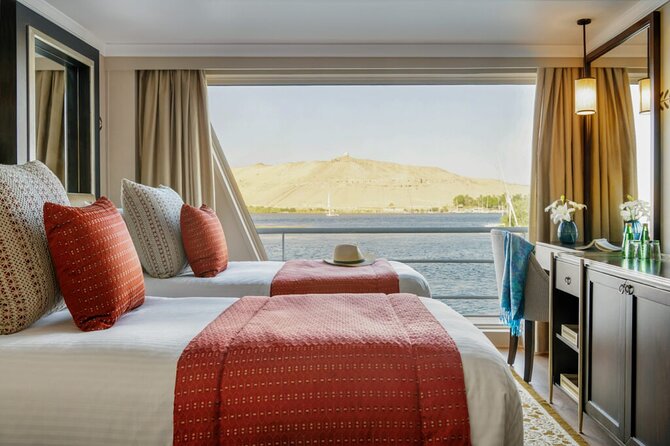
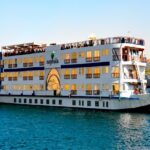
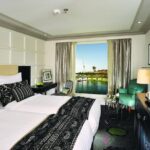
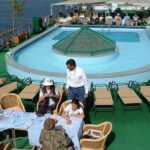
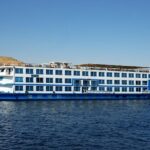
Cabins are included with all facilities, and the ship is described as a 5-star style experience. One caution from real-world variability: the assigned boat can differ. If your biggest priority is brand-new ship comfort, ask what ship you’re actually assigned (and what cabin category you’re booking), before you lock everything in.
Also included is air-conditioned vehicle transport and a horse-and-carriage element as part of the experience set. That carriage ride may be short and tied to the day’s temple movements, but the takeaway is the same: you’ll get a traditional touch without having to hunt it down.
Entrance fees, payment methods, and the one thing you should confirm upfront
Entrance fees are not included. That means your “final cost” depends on what you choose and how the sites handle payment that day. The good news: the tour notes that you’ll pay most entrance fees by card, but the High Dam and the motorboat to Philae are paid in cash.
So bring a mix:
- A card you trust for entrance fees
- Cash for those cash-only components
Language is another thing worth checking. The tour offers other languages with extra charge upon request, so if you want a specific language guide experience, confirm it clearly during booking. If your language expectation is strict, don’t assume it will match automatically—ask and get it confirmed in writing if possible.
Finally, remember timing. This itinerary is built on full days. If you’re sensitive to long temple days, plan for rest breaks on the ship, hydrate, and wear shoes that can handle stone steps without drama.
Value and price: why $349 can make sense or feel tight
At $349 per person for this 3-night cruise format, the value is strongest if you want all the major Upper Egypt sites in one package:
- Aswan’s Philae and High Dam
- Abu Simbel plus Kom Ombo
- Edfu’s Temple of Horus
- Luxor’s balloon plus Valley of the Kings, Hatshepsut, Colossi of Memnon, Karnak, and Luxor Temple
You’re also getting guided interpretation and most meals. For many independent travelers, the “real” cost isn’t tickets—it’s coordination time, guide fees, and transport headaches. Here, the package tries to remove those friction points.
Where the price can feel tight is when you add entrance fees, and when you have weather risk on balloon and Abu Simbel. Also, because this is a busy schedule, you don’t get lots of extra wandering time.
If you’re the kind of traveler who likes your days organized and guided—and you’re okay with early starts—this can be a fair deal. If you want a slower, more flexible trip with fewer transfers and more downtime, you might find better value in a less packed cruise plan.
Who this fits best: fast history lovers, first-timers, and budget-conscious groups
This tour fits best if you:
- Want to see Upper Egypt highlights without planning every connection
- Like having an Egyptology guide explain what you’re looking at
- Prefer door-to-door support rather than DIY navigation
- Are traveling in a small private-group setup (max 15) and want a more personal feel
It may be less ideal if you:
- Get tired by long days and multiple major sites in sequence
- Have strong needs around guide language and can’t risk a mismatch
- Want lots of free time for wandering without a set itinerary
A quick note on group setup: it’s designed as a private experience for your group only, so if you’re traveling with friends or family, you’ll usually get a calmer vibe than a mass tour.
Should you book this Aswan to Luxor cruise with Abu Simbel and a balloon?
If your main goal is: see the big names—Abu Simbel, Valley of the Kings, Karnak, balloon—then I think this package is a strong match. You’re paying for built-in structure: transfers, guide support, included meals, and a route that makes geographic sense. The early balloon slot plus the West Bank finale is the kind of combination that turns a trip into a story you’ll remember.
But book smart. Confirm your guide language preference, plan for entrance fees (and cash for High Dam and Philae motorboat), and accept that balloon and Abu Simbel can shift with weather. If you can handle a full schedule and you want maximum highlights per day, this one delivers.
If you want, tell me your travel month and whether you care most about the balloon, Abu Simbel, or the temples. I can help you sanity-check whether this pace will feel fun or stressful for your style.
FAQ
What is included in this tour price?
It includes 3 nights on the cruise, a cabin with facilities, meals (lunch on day 1 through breakfast on the last day, plus 3 dinners and 3 breakfasts and 3 lunches), the Egyptology guide, sites mentioned in the itinerary, hotel/port pickup and drop-off, air-conditioned vehicle transport, hot air balloon, and a horse and carriage element.
Are entrance fees included?
No. Entrance fees are not included. You’ll need to pay entrance fees on site, and the tour notes that most can be paid by card, except the High Dam and the motorboat to Philae, which are paid in cash.
Is the hot air balloon included, and what are the rules?
Yes, the hot air balloon is included. The tour notes that a camera is not allowed in the balloon basket (cellphone pictures are allowed), and children under 6 are not allowed for the balloon trip.
Does the tour include pickup and transfers?
Yes. You get hotel/port pickup and drop-off, plus air-conditioned vehicle transport between stops.
What happens if Abu Simbel is canceled due to weather?
If the Abu Simbel trip is canceled due to bad weather, you will be refunded $25 per person and $12.50 per child.
What happens if the hot air balloon is canceled due to weather?
If the hot air balloon is canceled due to bad weather, you will be refunded $25 per person and $12.50 per child.
When does the tour end in Luxor?
The tour ends in Luxor city on the last day around 4 to 5 pm, and drop-off can be at train or hotels in the Luxor east bank area.
You Might Also Enjoy
More Tour Reviews in Aswan
- 4-Days Nile Cruise From Aswan To Luxor including Abu Simbel and Hot Air Balloon
★ 5.0 · 3,142 reviews