REVIEW · GIZA
5 Days Cruise Luxor, Aswan,Tours,Abu Simbel,Hot Air Balloon, From Cairo By Plane
Book on Viator →Operated by Egypt Travel Line · Bookable on Viator
One word: balloon. This 5-day Upper Egypt tour strings together Luxor, Aswan, Kom Ombo, Edfu, and the big-ticket Abu Simbel day with a hot-air balloon over the Nile and the Valley of the Kings. I like that it’s built around a full-board Nile cruise, so you sleep on the route instead of packing and unpacking all the time.
My second big plus is the Egyptology guide and the hit-list of major sites—Karnak, Luxor Temple, Hatshepsut, and Horus at Edfu—so the visuals come with context, not just photo stops. The main drawback to consider is that entrance fees and drinks aren’t included, and your timing can hinge on Cairo flight/pickup coordination.
In This Review
- Key things that make this tour work
- A 5-Day Luxor to Aswan Nile Cruise From Cairo (With Abu Simbel)
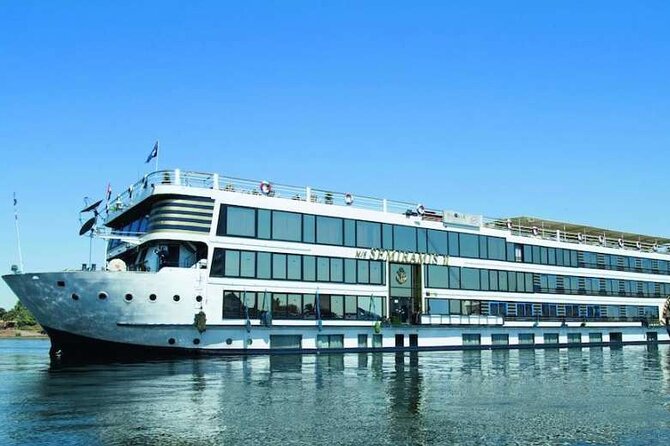
- Nile cruise comfort: what full-board really changes
- Hot-air balloon over Luxor and the Valley of the Kings
- Luxor in two days: Karnak, Luxor Temple, Hatshepsut, and the Colossi
- West Bank classics: Valley of the Kings, Hatshepsut, and Memnon
- East Bank power: Karnak and Luxor Temple
- Cruising the Nile to Aswan: Edfu’s Horus and Kom Ombo’s Sobek
- Abu Simbel: the early guided visit that’s worth the effort
- Aswan highlights: Philae Temple and the High Dam
- Price and logistics: does $1,259 make sense for what you get?
- What to budget for entrance fees and drinks
- Who this tour suits best (and who should rethink it)
- Should you book this Luxor to Aswan cruise with Abu Simbel?
- FAQ
- FAQ
- Is the hot-air balloon ride included?
- Are entrance fees included?
- Are drinks included on the cruise?
- How many nights are you on the Nile cruise ship?
- Which sites are included in the sightseeing?
- Does the tour include flights from Cairo?
- Is pickup available from Cairo airport or hotels?
- Is there Wi-Fi onboard?
Key things that make this tour work
- Hot-air balloon ride over the Nile and the Valley of the Kings, timed for prime views
- 4 nights on a 5-star Nile cruise with breakfast, lunch, and dinner included
- Two days in Luxor means you actually get Karnak plus the West Bank sights at a human pace
- Abu Simbel is handled with an early guided visit, then you’re back for cruise time in Aswan
- Sites are grouped by geography (Luxor east/west, then Nile sailing, then Aswan) to reduce backtracking
- Pickup and 2-way transfers from Cairo airport or hotels aim to cut stress
A 5-Day Luxor to Aswan Nile Cruise From Cairo (With Abu Simbel)
This is a classic Upper Egypt route, the one most people dream about: Luxor first, then the Nile sailing down to Aswan, with Abu Simbel as the dramatic interrupt. You start in Cairo and travel by plane, then the cruise does the heavy lifting for transport while you focus on temples and tombs.
The pacing is built for first-timers who want the must-sees without spending every waking hour in transit. You’ll have a couple of full sightseeing blocks in Luxor, then one long cruise day through Kom Ombo and Edfu, then Abu Simbel, then Aswan’s highlights.
Nile cruise comfort: what full-board really changes
You’re included in a 5-star Nile cruise for 4 nights, which matters more than it sounds. “Full-board” here means breakfast and dinner each day plus lunch on the cruise days that fall inside the itinerary window (lunch is listed 4 times, meals are listed as breakfast 4 times and dinner 4 times). Practically, that’s fewer decisions for you, and less hunting for food after a long temple morning.
This also affects your energy. When you stay on the boat, the “after-sight” part of the day is simpler: you can shower, eat, and regroup without the mental load of moving hotels. If your goal is to enjoy Egypt, not just survive it, that’s a real value.
One watch-out: some passengers have raised concerns about communication and service consistency. So while the concept is a smooth cruise setup, I’d go in with the mindset that you should stay on top of timing—especially if flights or pickups shift.
Hot-air balloon over Luxor and the Valley of the Kings
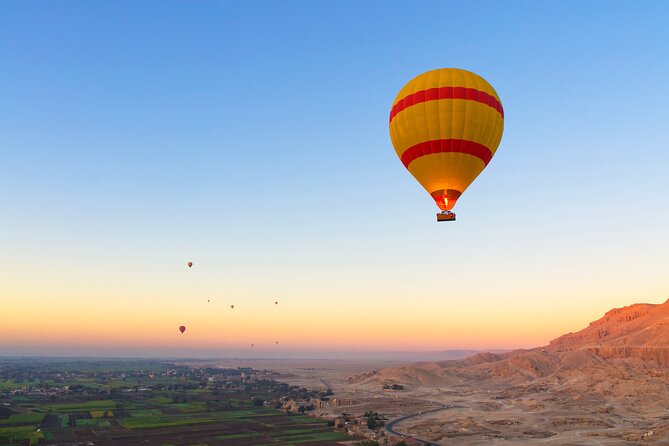
The hot-air balloon is the headline for a reason. You’re scheduled for a balloon ride in Luxor after you do the key Luxor Temple and Avenue of Sphinxes sights earlier on Day 2, and the route includes soaring above the Nile and the Valley of the Kings. That viewpoint is hard to replicate with any other activity, because the scale of the geography only becomes obvious from above.
Here’s the practical side. Balloon rides depend on weather, and this experience explicitly notes good weather is required. If conditions aren’t right, you’ll be offered a different date or a full refund—so don’t book this if you’re trying to lock down a perfectly timed second plan that can’t flex.
Also, balloon mornings tend to mean early starts. Even though the itinerary doesn’t spell out the hour, you should assume you’ll want to be rested the night before and ready to move quickly.
Luxor in two days: Karnak, Luxor Temple, Hatshepsut, and the Colossi
Luxor can feel endless if you try to force everything into one day. This itinerary avoids that trap by splitting it into East Bank icons and West Bank funerary masterpieces.
West Bank classics: Valley of the Kings, Hatshepsut, and Memnon
Day 1 focuses on the west side of the Nile. You’ll start in the Valley of the Kings, famous for royal and noble tombs used for centuries. The tour description also highlights the more modern archaeological story: the last burial chamber discovered in 2006 (Cemetery 63), plus the discovery of two additional entrances to the same chamber in 2008. That kind of detail helps you see the valley as living history, not just a scenic backdrop.
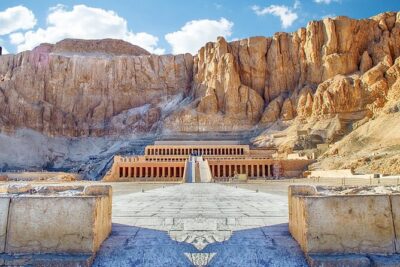
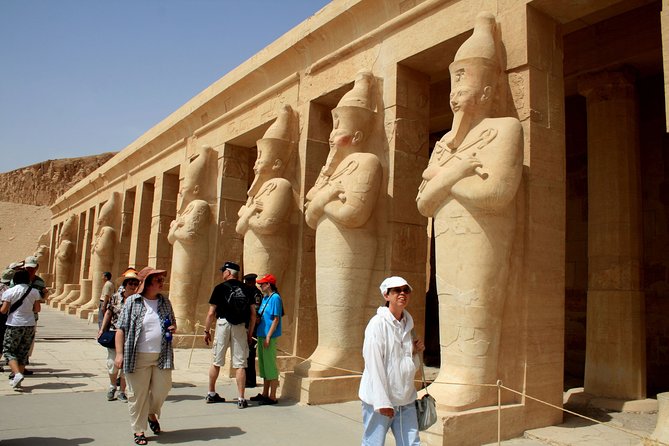
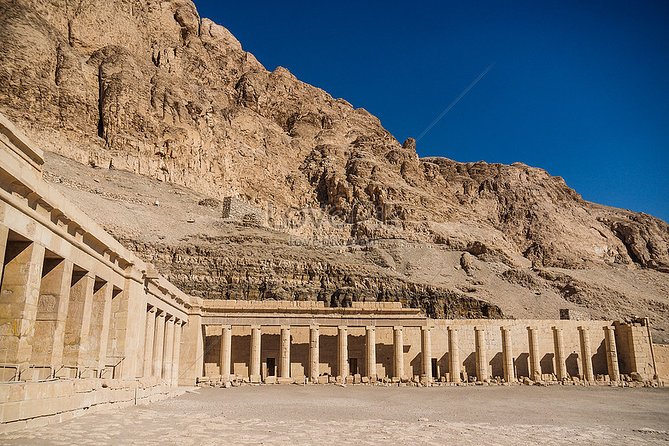
Next is the Temple of Hatshepsut at Deir el-Bahari. What I like about this stop is how distinctive the architecture is compared to many temple layouts: three successive levels with open terraces, built of limestone, and designed for a queen’s power to read in stone. It’s one of those places where you can keep looking up and still find new angles.
Then you wrap with the Colossi of Memnon—the two massive statues that remain from Amenhotep III’s memorial complex. They’re short on buildings and long on presence, which is exactly what you want after a day of walking tomb entrances and temple terraces.
East Bank power: Karnak and Luxor Temple
Day 2 is built for scale. Karnak Temple is the first stop, and it’s described as one of the world’s great architectural masterpieces. Even if you don’t memorize the details, the key idea is that Karnak is an evolving complex built across reigns. The highlights mentioned include the Avenue of Sphinxes, the Hypostyle Hall with 134 columns, and major features like the sacred lake and obelisks.
You’ll then see Luxor Temple, dedicated to the Theban Triad: Amun-Ra, Mut, and Khonsu. You’re also set to view granite statues of Ramses the Great. This pairing—Karnak first, Luxor Temple second—helps because you get both the sprawling “temple city” feel and the more focused ceremonial axis.
A short stop for the Avenue of Sphinxes ties it together visually. The tour notes that while the original avenue was about 3 kilometers, today only a few hundred meters remain, which is a good reminder that Egypt rewards patience even when pieces are missing.
Cruising the Nile to Aswan: Edfu’s Horus and Kom Ombo’s Sobek
Day 3 shifts gears from sightseeing on land to temple visits paired with sailing. After breakfast, you go to Edfu to see the Temple of Horus, dedicated to the falcon-headed god. The description calls it relatively “young” among pharaonic temples, and it’s well-preserved—so you can often get a clearer read on carvings and temple layout than at sites that are mostly ruins.
Then you visit Kom Ombo, dedicated to Sobek, the crocodile god. If you’re the kind of traveler who likes the logic behind where you’re standing, these two temples make a satisfying contrast: one is Horus, one is Sobek. The themes help your brain connect the day.
You also get the key “cruise” element here. Lunch is on board as the ship sails toward Aswan, and you overnight in Aswan. This is where the itinerary earns its smoothness—you’re not losing hours to constant transfers, and you have a built-in wind-down.
Abu Simbel: the early guided visit that’s worth the effort
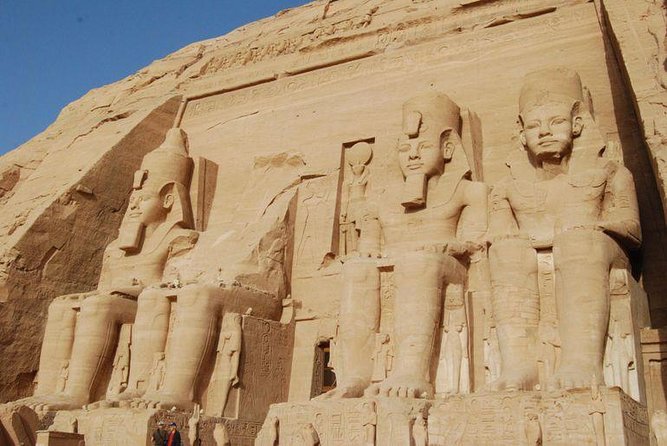
On Day 4 you’re scheduled for an early morning visit to the Abu Simbel Temple Complex, with a guided tour. The itinerary sets this as a full, focused block (it lists 7 hours total), and then you’re transferred back to the cruise ship for lunch.
What makes Abu Simbel special in an itinerary like this is not just the temple itself—it’s the time structure. You’ll be asked to wake up and go, but the payoff is that the rest of the day becomes more relaxed. After returning, you can enjoy cruise activities and dinner in the evening, with another night on board in Aswan.
If you hate rushed sightseeing, Abu Simbel can still feel like a sprint because it’s a long day. But the trade is that you get a guided visit rather than trying to DIY it across a huge distance.
Aswan highlights: Philae Temple and the High Dam
Day 5 slows down in a good way. After breakfast, you check out around 8am, then start with a guided visit to Philae Temple. The description specifically calls out a boat trip to reach the temple, which adds a bit of movement and variety after temple-heavy mornings.
Philae is described as built in honor of goddess Isis, and the boat-to-temple rhythm is one of those travel moments that feels different from just walking out of a coach.
Next is the Aswan High Dam. This stop gives you a modern Egypt layer to balance all the ancient sites. Even if you don’t come for engineering history, it’s a useful contrast point: the Nile isn’t only a setting for pharaohs—it’s also a force that shapes modern life and infrastructure.
Price and logistics: does $1,259 make sense for what you get?
At $1,259 per person for about 5 days, the value depends on what you would otherwise pay if you planned parts separately. What you’re bundling includes:
- Flights tickets from Cairo (exact routing isn’t spelled out, but air travel is included)
- 4 nights on a 5-star Nile cruise
- A package of major sites across Luxor, Edfu, Kom Ombo, Aswan, and Abu Simbel
- Hot-air balloon
- Egyptology guiding
- Free Wi-Fi up to 4GB
If you were to price these independently—especially the cruise nights plus balloon plus guide—it’s easy to see why packaged tours can feel reasonable. Where value can wobble is in the “extras” category. Entrance fees aren’t included, and drinks aren’t included, so you’ll want to bring extra money for monuments and your personal pace.
Logistically, the tour includes pickup offered and private 2-way transfers from Cairo airport or hotels, plus a ticket redemption point in Cairo. That’s good. Still, some past experiences have pointed to weak communication when travel timing changes. I’d treat this as a tour you verify early: confirm your schedule, double-check documents, and keep your flight details handy.
What to budget for entrance fees and drinks
This is the part that trips people up. The tour clearly lists entrance fees not included and drinks not included. Your guide will handle the routing and visit order, but you should still expect to pay monument entry separately on the ground.
You’ll also likely spend more on optional upgrades like extra drinks, snacks, and any personal photography fees if they exist at a specific site. I’d plan a daily buffer so you don’t end up counting coins mid-temple.
Who this tour suits best (and who should rethink it)
This tour fits you if:
- You want a tight 5-day run through Upper Egypt without bouncing hotels every night
- You care about major monuments with guiding context, not just sightseeing by GPS
- You like structured days with food handled (breakfast, lunch, dinner are built in across the itinerary)
- You’re excited by the balloon as a once-in-a-trip highlight
It may be less ideal if:
- You’re the type who needs ultra-tight communication and predictable timing day-to-day
- You’re traveling on a tight connection schedule out of Cairo and can’t absorb delays
- You dislike early starts, since Abu Simbel and balloon depend on getting moving quickly
Should you book this Luxor to Aswan cruise with Abu Simbel?
I’d book it if you want the big Upper Egypt hits in one go and you value the comfort of staying on a Nile boat. The combination of Luxor’s East and West Bank icons, a dedicated balloon experience, and Abu Simbel as a guided day is a strong package for the time you have.
But if you’re booking with high-stakes flight connections or you know you’ll stress about last-minute schedule changes, I’d be more cautious. The setup looks great on paper, and the idea of professional guiding and VIP-style service is exactly what you hope for—but communication and on-the-ground consistency can’t be guaranteed.
One final practical note: the experience requires good weather, and balloon timing depends on conditions. So keep your expectations flexible, and you’ll get more joy out of the trip.
FAQ
FAQ
Is the hot-air balloon ride included?
Yes. The hot-air balloon trip is listed as included, and the experience notes that good weather is required.
Are entrance fees included?
No. Entrance fees are not included, so you’ll need to budget for monument entry.
Are drinks included on the cruise?
No. Drinks are listed as not included.
How many nights are you on the Nile cruise ship?
You get 4 nights on a 5-star Nile cruise boat.
Which sites are included in the sightseeing?
Included stops cover Valley of the Kings, Temple of Hatshepsut, Colossi of Memnon, Karnak Temple, Luxor Temple, Edfu (Temple of Horus), Kom Ombo (Temple of Kom Ombo), Abu Simbel Temple Complex, Philae Temple, and Aswan High Dam.
Does the tour include flights from Cairo?
Yes. Flight tickets are listed as included, and the overall experience runs from Cairo by plane.
Is pickup available from Cairo airport or hotels?
Pickup is offered, and the tour lists private 2-way transfers from Cairo airport or hotels.
Is there Wi-Fi onboard?
Yes. Free Wi-Fi is included up to 4GB.